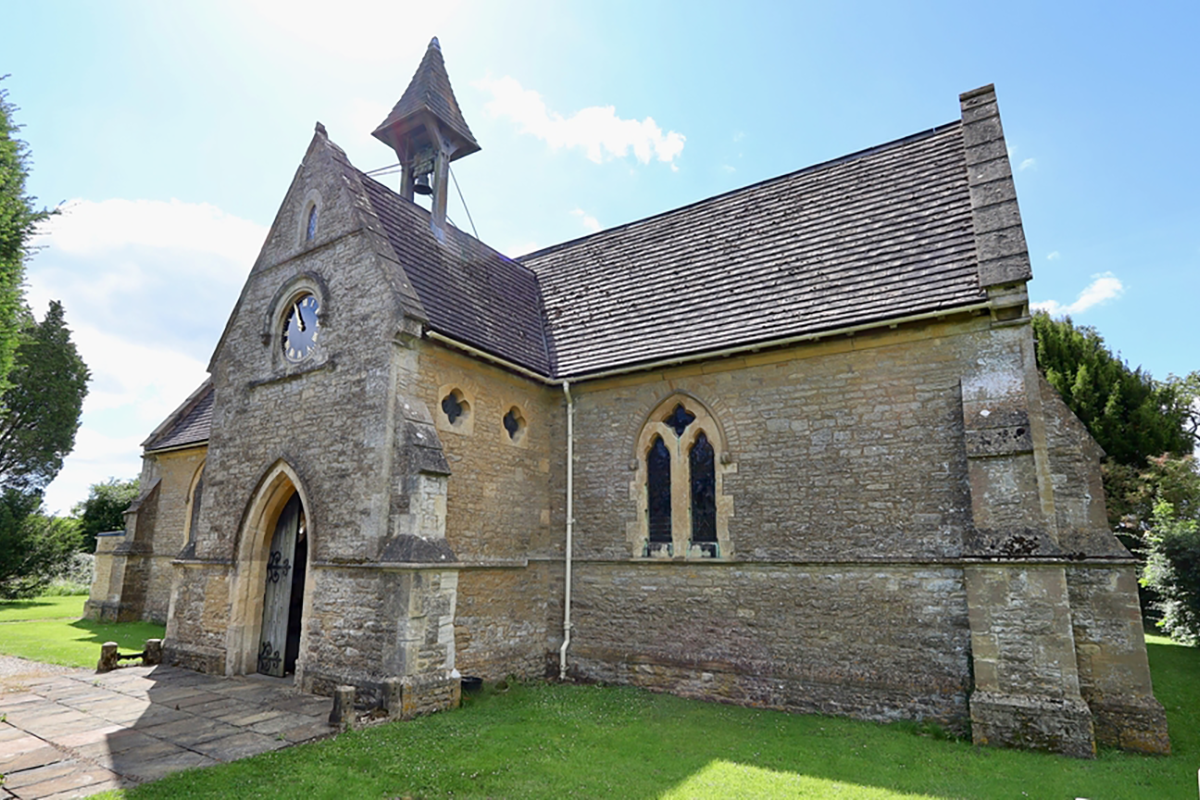
Holy Ascension Church, Oddington, in the picturesque Evenlode Vale, is a striking example of 13th-century Early English architectural style. Designed by S W Daukes and consecrated in 1852, the stone-built church has long served its rural community. Following a major reordering in 2012, it evolved into a central hub for seven surrounding parishes. Heating such a historic and intermittently used building, however, presented a significant challenge, particularly as the existing system struggled to align with how the space was used.
A heating system no longer fit for purpose
As part of the 2012 refurbishment, an underfloor heating system powered by a remote electric heat pump was installed. While modern in principle, it proved impractical due to the nature of underfloor heating, which requires long warm-up times. The system was unable to provide comfortable conditions quickly for services and events, which are typically scheduled rather than continuous. “The system just wasn’t responsive enough for how the building is used,” explains Churchwarden Graeme Ferrero. “By the time the space had warmed up, the service or event was often nearly over.” To compensate, the system had to run continuously to maintain a baseline temperature, resulting in high running costs and inefficient energy use, making it unsustainable for intermittent use.
A responsive air-to-air solution by Heidi Air Conditioning
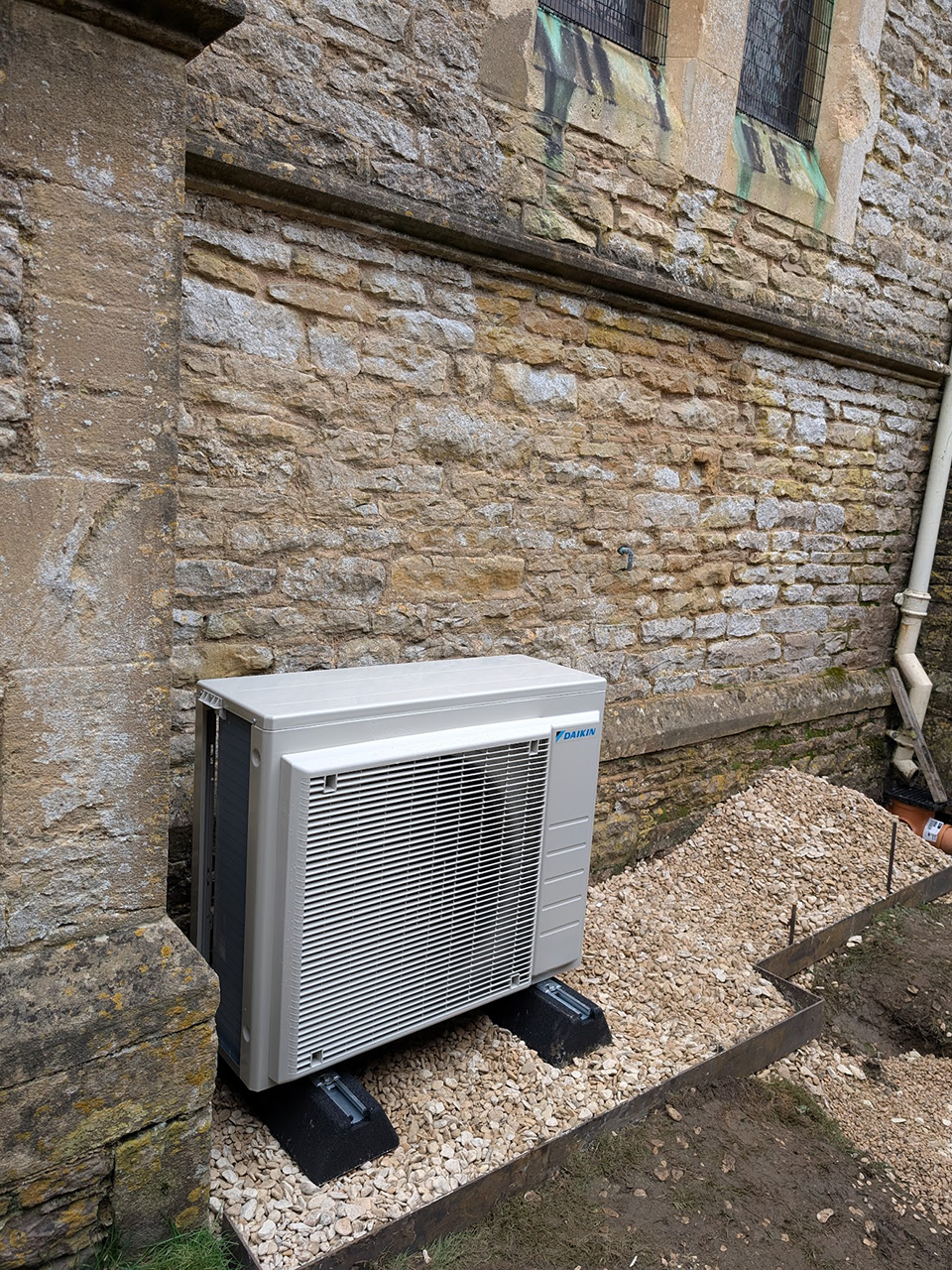
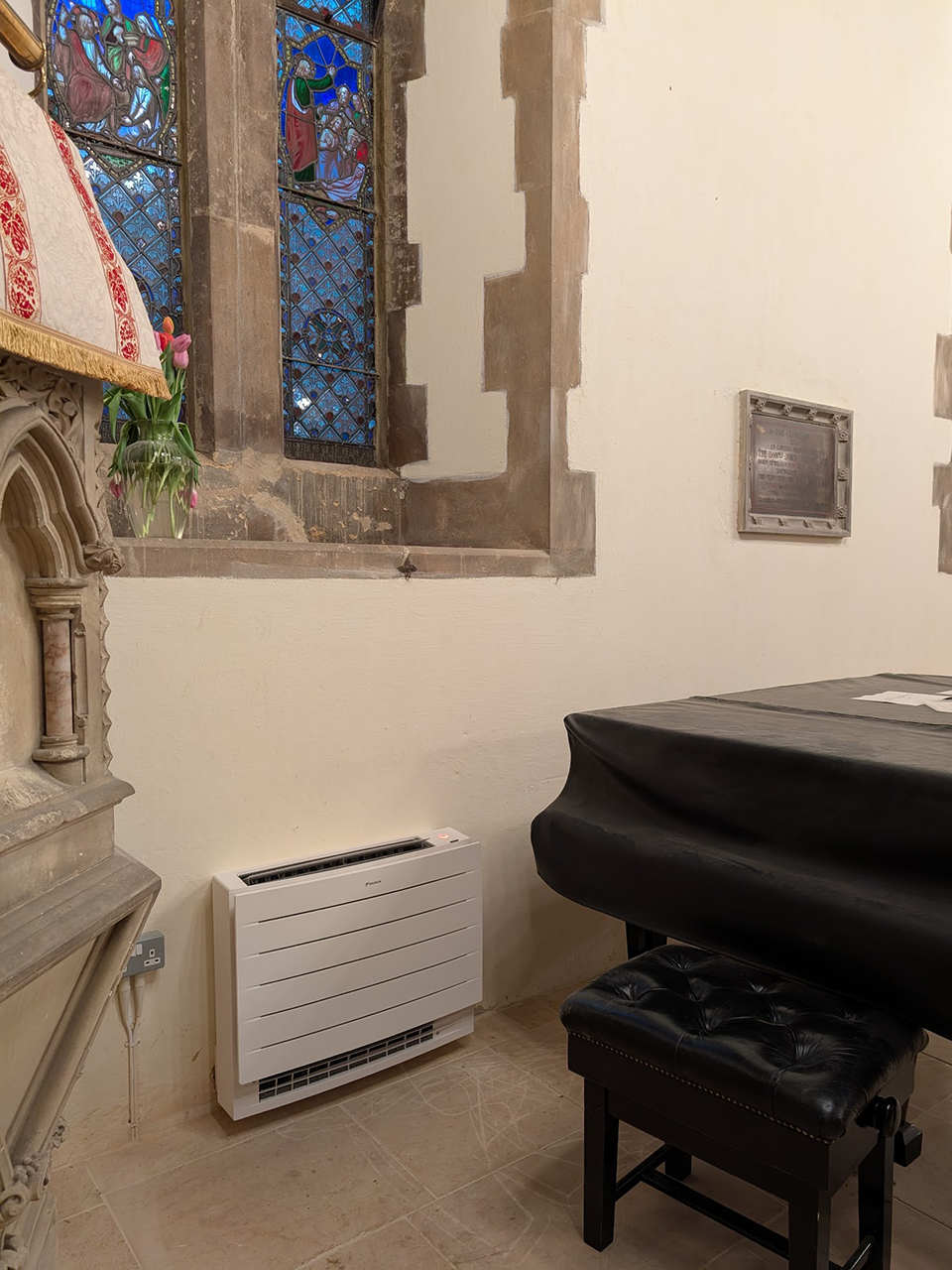
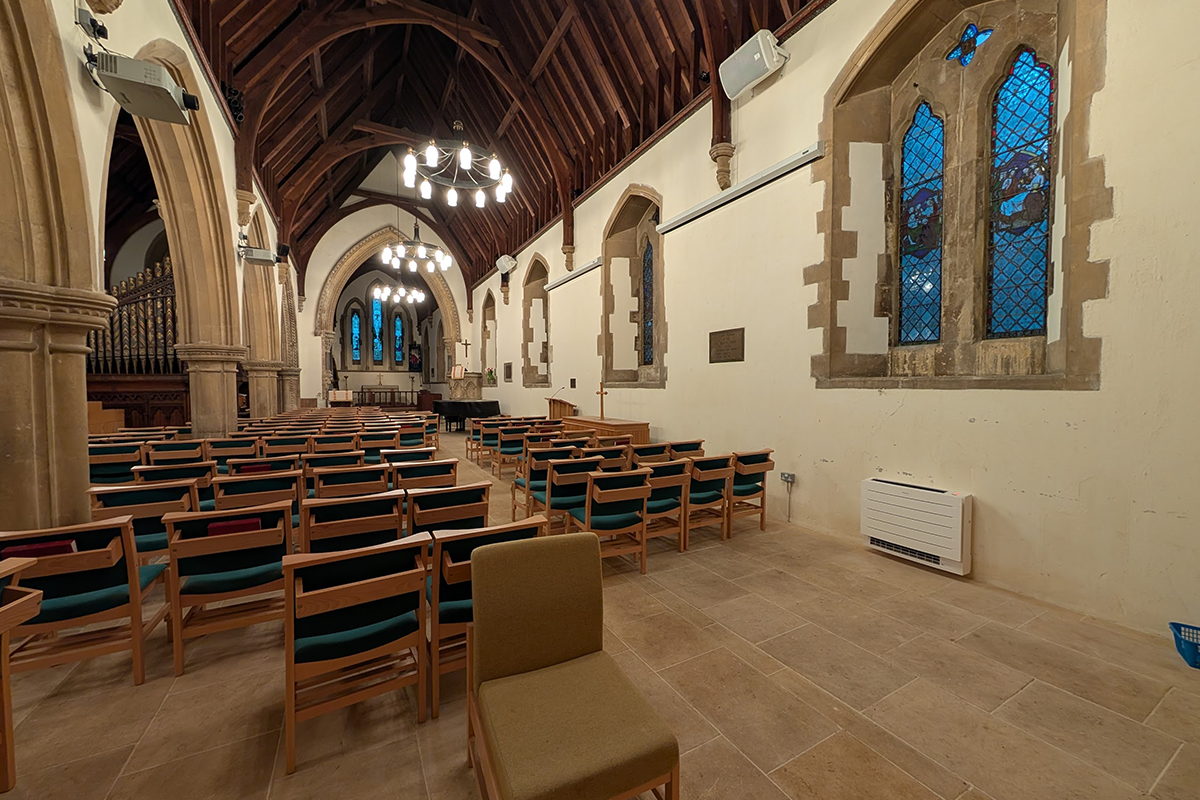
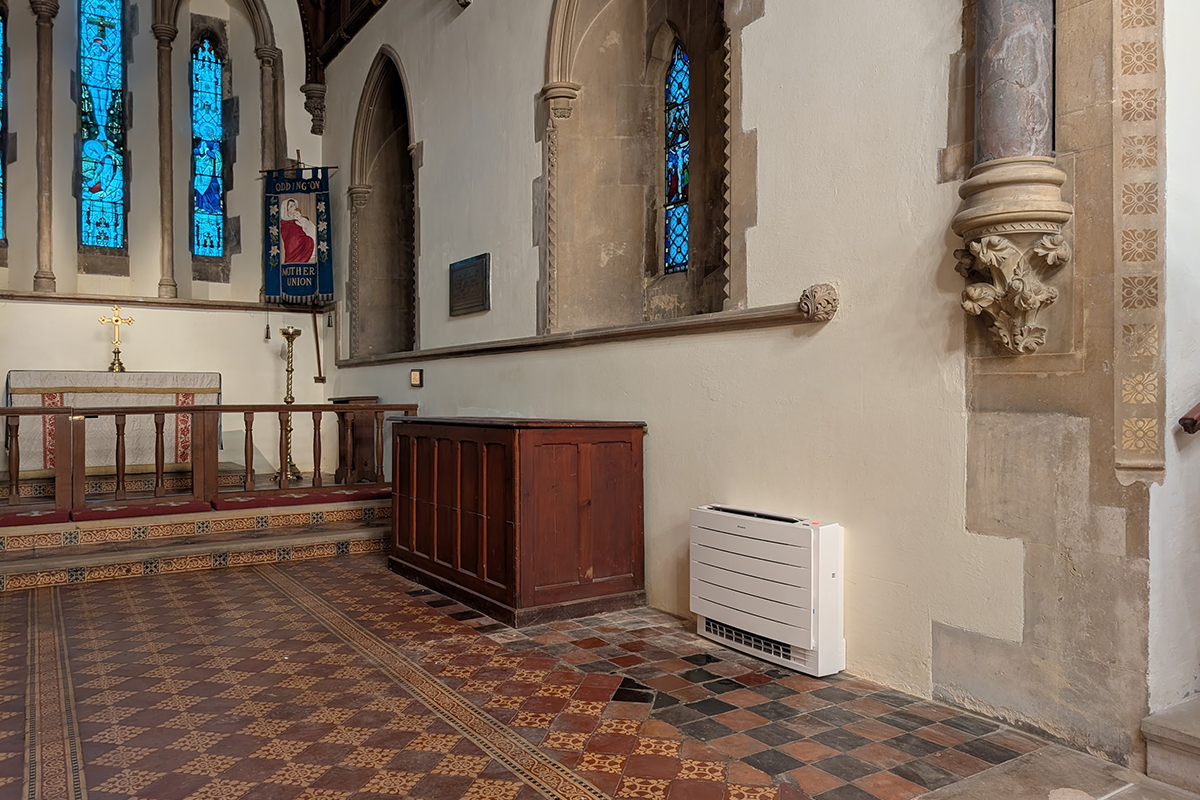
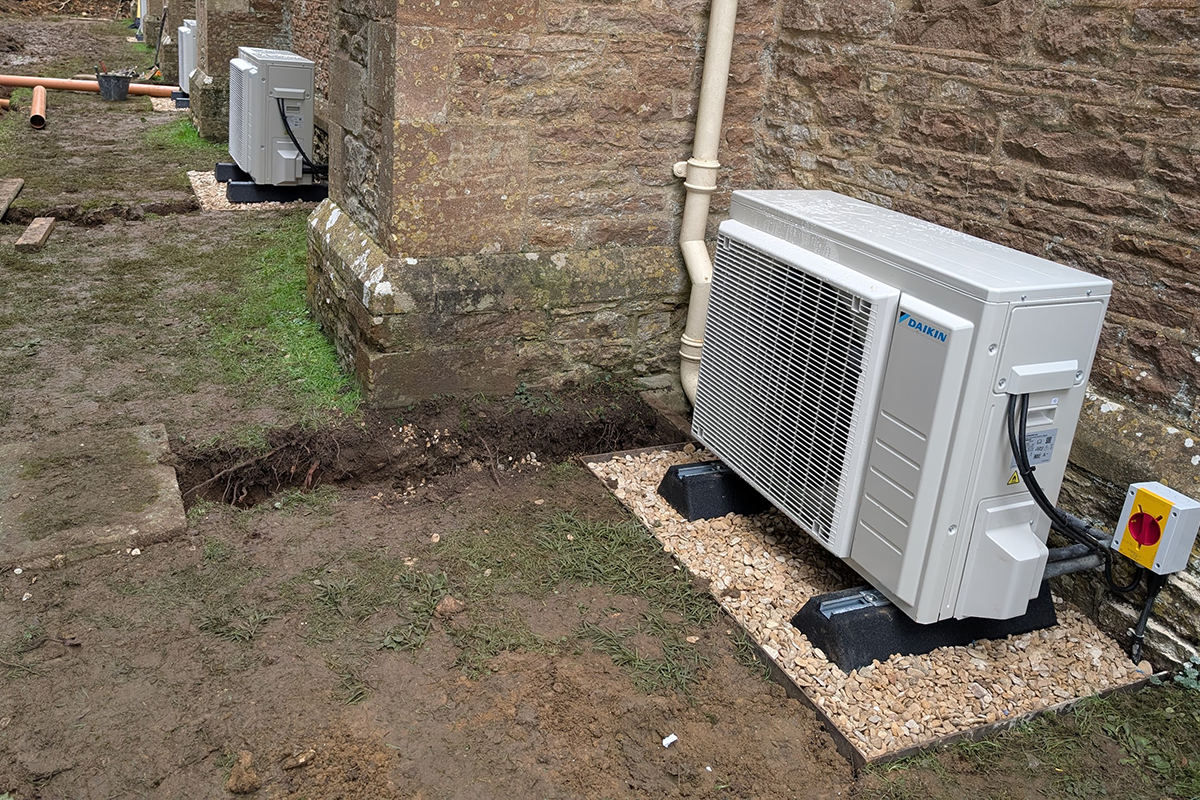
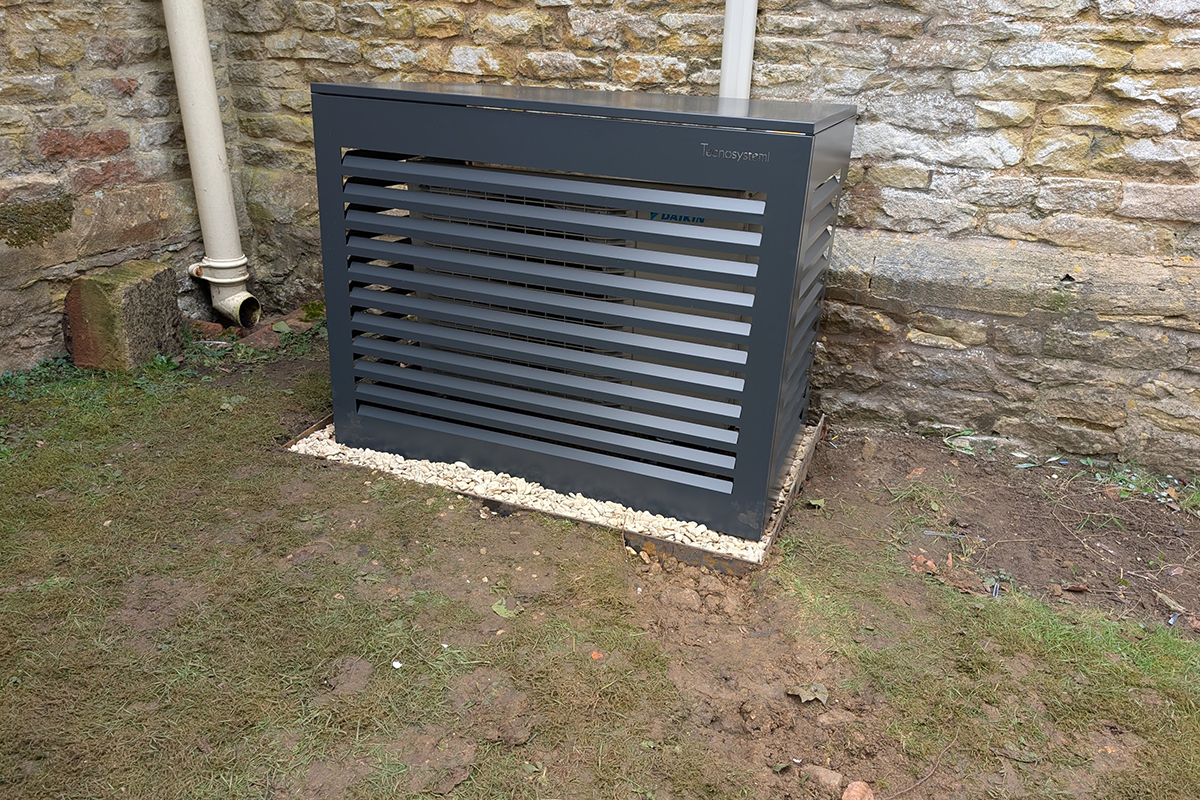
To overcome these limitations, a new heating strategy was developed and delivered by Heidi Air Conditioning Limited, a family-run business in Cheltenham that specialises in residential heat pump and air conditioning systems. Heidi AC designed a solution focused on responsiveness, efficiency, and sensitivity to the historic building. “The brief was to provide a system that addressed the delay in warm-up times while improving efficiency,” says Heidi AC’s Miguel Munidinano. “The chosen solution was a discreet air-to-air heat pump system using Daikin Perfera units. Five FVXM50 floor-mounted units were installed across the main church space, each with its own outdoor unit. A separate FTXM42A wall-mounted unit serves the office,” explains Miguel.
Fast, efficient, and controllable heating
The new system delivered immediate benefits in comfort and usability. Unlike the previous underfloor system, the fan-assisted units now provide rapid heat delivery, with a floor-warming mode that directs warm air across the occupied zone. This allows the church to be heated precisely when needed rather than relying on continuous operation. The system also delivers strong energy performance, producing significantly more heat per unit of electricity compared to traditional electric or infrared heating. “The system provides fast warm-up and improved efficiency compared to the previous solution,” adds Miguel.
Proven performance in real conditions
The system was commissioned in February 2025 during a particularly cold spell, providing a clear test of real-world performance. At the time, average daytime temperatures in Oddington were 3.2°C, and internal temperatures in the church had fallen below 4°C. Despite these conditions, the system raised the internal temperature to 20°C in less than eight hours, while outside temperatures remained around 2.5°C. Over the course of the month, the new systems confirmed its ability to deliver rapid heating and high efficiency even in challenging winter conditions. “The recorded data demonstrates the efficiency and performance of the system under low external temperatures,” says Miguel.
Smart control and reduced running costs
A key advantage of the installation lies in its flexibility and controllability. The system maintains a setback temperature of 10°C when the building is not in use to help prevent damp, rising to 20°C ahead of services and events. All units are Wi-Fi enabled, allowing remote scheduling and control via the Daikin Onecta app, without the need for manual intervention. The system also provides detailed monitoring of indoor and outdoor temperature, indoor humidity, heat energy produced, and electrical energy consumed, giving the church accurate visibility of running costs and the ability to optimise performance over time. The low running costs compared to direct electric or infrared heating allow the church to maintain a setback temperature when unoccupied while avoiding unnecessary energy waste.
A sustainable solution for historic buildings
By replacing an inefficient, slow-response system with a modern air-to-air solution, Holy Ascension Church has successfully balanced heritage preservation, comfort, and energy efficiency. The project demonstrates how carefully designed heat pump systems can transform the usability of historic, intermittently occupied buildings while providing a practical and sustainable solution for similar properties.
The brief was to provide a system that addressed the delay in warm-up times while improving efficiency. The recorded data demonstrates the efficiency and performance of the system under low external temperatures.
Get in touch with an installer
Daikin has a nationwide network of independent installers, who are experts in installing Daikin systems.