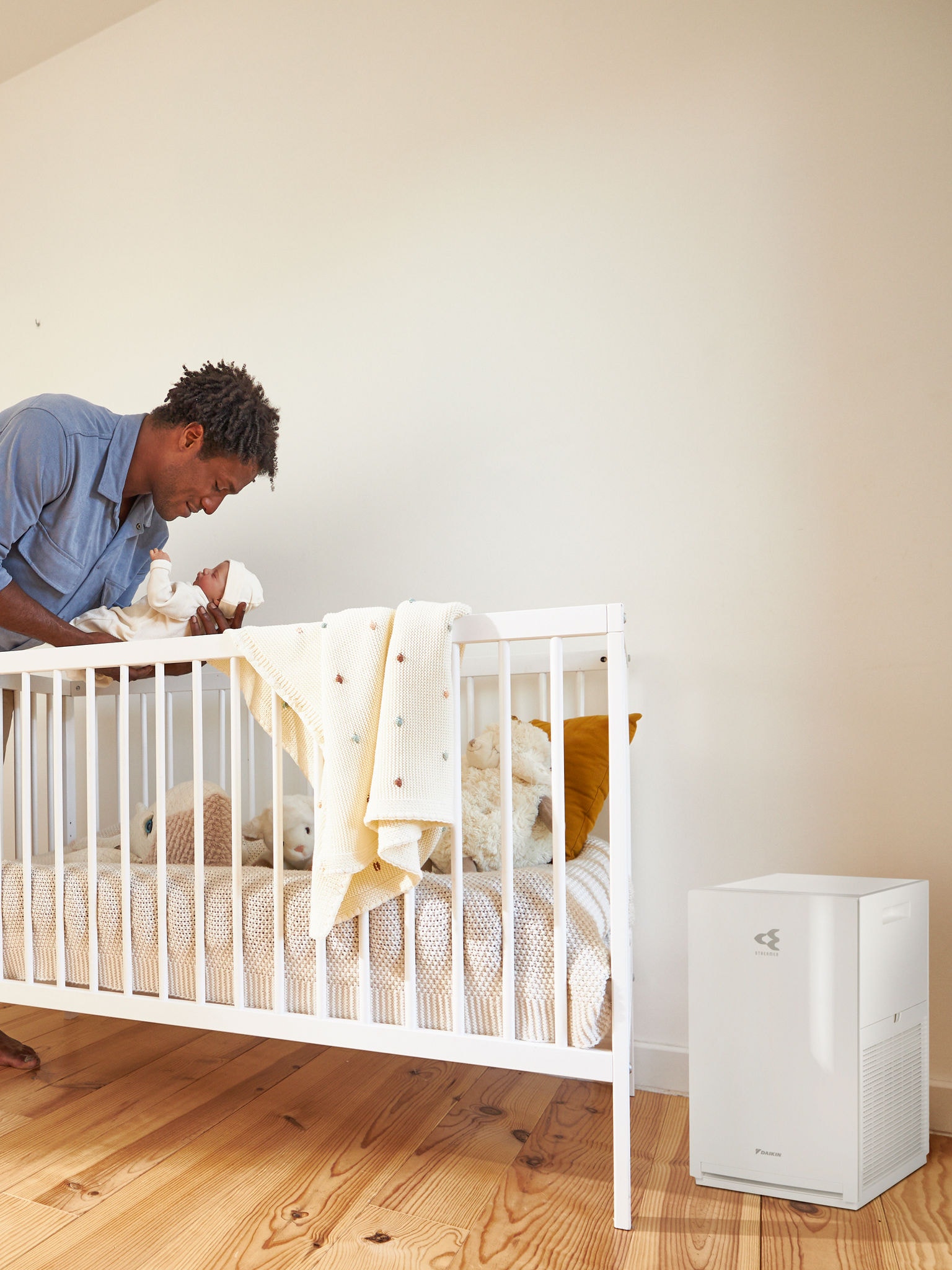
Do air purifiers make your baby’s nursery healthier?
How safe air purification supports healthier nursery air
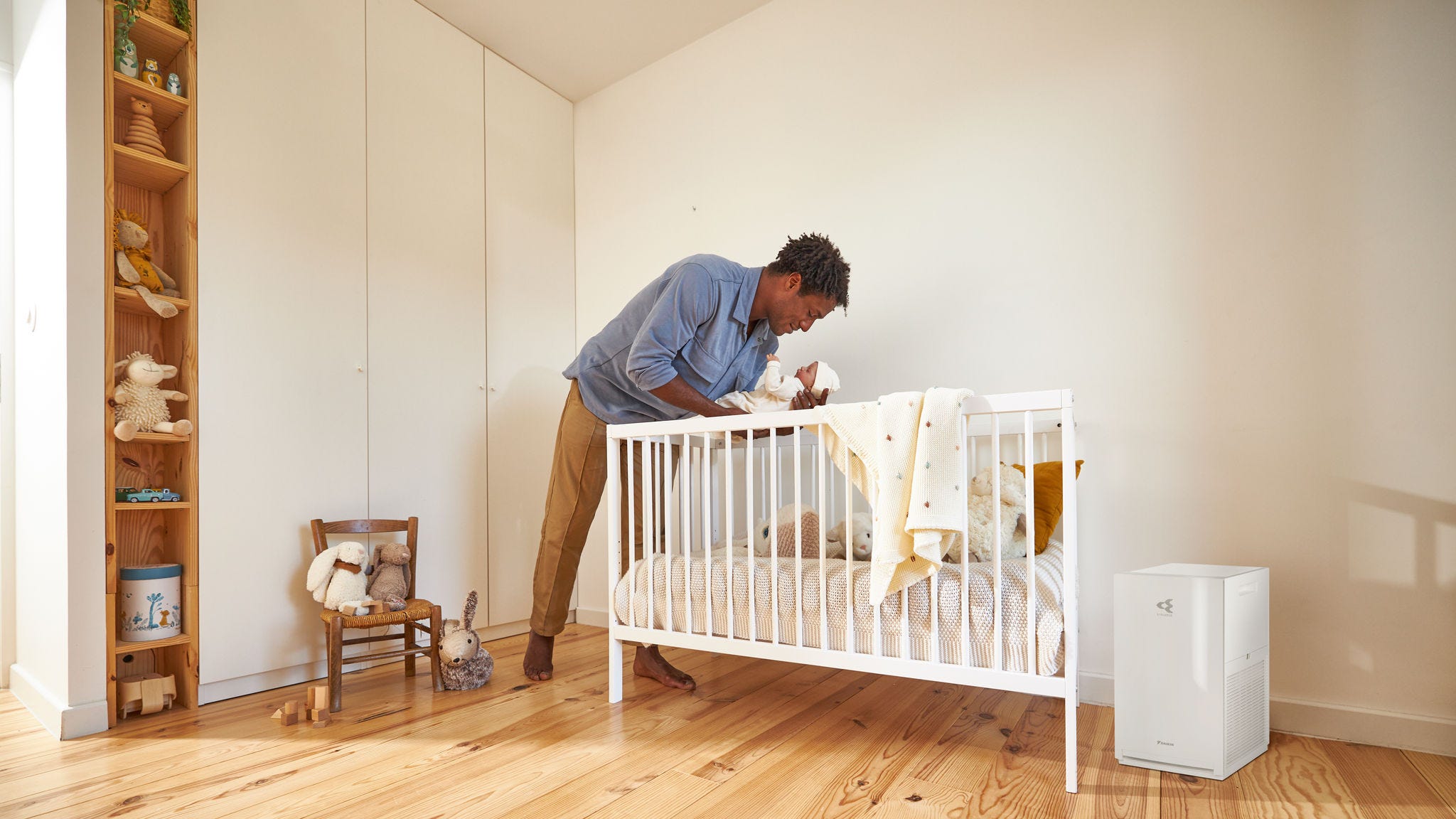
Yes, air purifiers can make your baby’s nursery healthier when you choose certified, ozone-free models and use them correctly. A high-quality air purifier helps reduce dust, pollen, mould spores and other airborne irritants that can affect a baby’s breathing and sleep. Because infants breathe more air relative to their body weight than adults, indoor air quality matters even more in early life.
This guide explains why clean air is important for babies, how air purifiers work, which features matter most for nurseries, and how to use them safely.
Why does air quality matter for your baby?
The air your baby breathes in their nursery can have a profound impact on their immediate comfort and long-term health. Indoor pollutants such as dust, pollen, pet dander, mould spores, and VOCs1 emitted from paints or furniture can linger in a closed room and irritate a newborn’s developing respiratory system. Infants breathe significantly more air per kilogram of body weight than adults, making them especially vulnerable to airborne irritants.
A modern concern is that newer homes, built to be tighter and more energy efficient, often trap pollutants indoors unless adequately ventilated. In that context, using an air purifier in a nursery becomes a proactive step to control these risks. By creating cleaner, fresher air, parents can provide peace of mind and potentially help improve their child's breathing comfort and sleep patterns.
1 VOCs are gases emitted from common household products (paints, cleaners, furniture) and industrial sites. Short-term effects include eye/throat irritation, headaches, and nausea. Long-term exposure can damage the liver, kidneys, and central nervous system.
How do air purifiers work?
At its core, an air purifier is a device that draws in room air, passes it through multiple stages of filtration, and returns cleaner air back into the environment. A general air cleaner may simply circulate or mildly filter air. A Daikin air purifier uses an electrostatic HEPA filter, that causes less filter clogging, and activated carbon filter to capture particles and volatile contaminants.
A pre‑filter traps larger particles like dust and pet hair, extending the life of the HEPA filter. HEPA filters (High-Efficiency Particulate Air) are industry‑standard for capturing at least 99.97% of particles as small as 0.3 microns, including pollen, mould spores, pet dander, and fine dust. The activated carbon stage removes odours and VOCs by absorption.
Unlike Daikin’s air purifiers, some devices use ozone or ionisation technologies, which are explicitly discouraged for baby nurseries because ozone exposure poses respiratory risks for infants. Choosing an air purifier with only mechanical filtration and no ozone generation is essential to keep the nursery safe. All Daikin models have real‑time air quality sensors and programmable modes, enabling automatic adjustment based on pollution levels.
Are air purifiers safe for babies?
When selecting an air purifier for a newborn or infant, safety considerations revolve around noise levels, emissions, and filter integrity.
Parents and carers should look for energy efficient units with low noise (ideally < 50 dB), for example the Daikin MC55W, so as not to disturb sleep. Some specially designed models even include white noise and soft nightlights to support bedtime routines. Many systems now incorporate real-time air quality monitoring and automatic fan adjustment to ensure consistent performance without parental intervention.
In summary, Daikin air purifiers, with certified filtration and real-time air monitoring, are considered safe for newborns.
Key benefits of an air purifier in a baby's nursery
A high-quality air purifier helps create a cleaner, calmer nursery environment by continuously removing common indoor pollutants that can irritate a baby’s developing airways.
An air purifier can help reduce exposure to:
- allergens (such as pollen)
- mould spores
- bacteria
- pet dander
- fine dust particles
With an electrostatic HEPA filter, airborne particles can be captured with an efficiency of up to 99.97% with an electrostatic HEPA filter, helping to lower the overall pollutant load in the room.
Babies breathe up to 50% more air per kilogram of body weight than adults, making them far more exposed to irritants that trigger sneezing, congestion, or skin reactions. Indoor pollutant levels may be 2 to 5 times higher than outdoor air, underscoring the need for filtration indoors. Studies link early-life exposure to lesser air quality with increased risk of developing childhood asthma, allergy sensitisation, and recurring respiratory infections.
Cleaner nursery air can also contribute to better sleep quality. Fewer irritants in the air mean less congestion and fewer disruptions during the night, helping babies rest more comfortably and for longer periods.
Over the long term, children growing up in cleaner indoor environments may face fewer doctor visits for colds or asthma, and parents report lasting comfort benefits across seasons. Investing in an effective air purifier thus can yield tangible health and sleep dividends for developing infants.
How to choose the right air purifier for your baby's room?
Choosing an air purifier for a nursery requires focusing on performance, safety and comfort. The following criteria help ensure effective air cleaning without disturbing your baby’s sleep.
Room size coverage
Room size coverage is one of the most important criteria when selecting an air purifier for a baby’s room. In most European homes, nurseries typically range between 8 and 14 m², so it’s essential to choose a device that is explicitly rated for that surface area.
European manufacturers often list a recommended maximum room size in square meters, which makes comparison straightforward. For a baby’s room, the purifier should be capable of achieving at least 2 to 5 air changes per hour (ACH) in the given space—especially important in enclosed rooms with limited ventilation.
HEPA filter inclusion and filtration levels
HEPA filtration is essential for a nursery environment. Daikin’s electrostatic HEPA filters are designed to maintain performance over time, with a claimed lifespan of up to 10 years under normal conditions.
Effective HEPA filtration helps capture fine particles such as pollen, dust and mould spores, while additional carbon filtration supports the removal of odours and VOCs.
Noise levels ideal for crib-side placement
We all know how important a baby’s sleep is, and how much a good night’s sleep for baby helps parents’ wellbeing. Look for an air purifier with noise levels under 50 dB, ideally in the 30–44 dB range.
Daikin offers some of the quietest air purifiers on the market, operating as low as 19 dBA in sleep mode, helping maintain clean air without disrupting sleep.
Ease of maintenance and filter change indicators
For tech savvy parents and carers, features like filter change indicators, smartphone app monitoring, child lock settings, and real time air quality sensors improve ease of use and safety.
Suitable Daikin models for nurseries
Daikin offers several well-tested systems suitable for nurseries. The Daikin MC55W is compact and effective for small rooms up to 82 m², using a electrostatic HEPA filter and flash streamer technology that breaks down viruses, allergens, and formaldehyde. Its night mode runs at just 19 dB, making it one of the quietest systems available.
Another notable option is the Daikin MCK555A which combines air purification with humidification, ideal in winter or dry climates, and supports rooms up to 82 m².
Both models are CE-certified, and tested under European VOC reduction standards, making them safe and efficient choices for infant environments.
Placement and use of an air purifier in a nursery
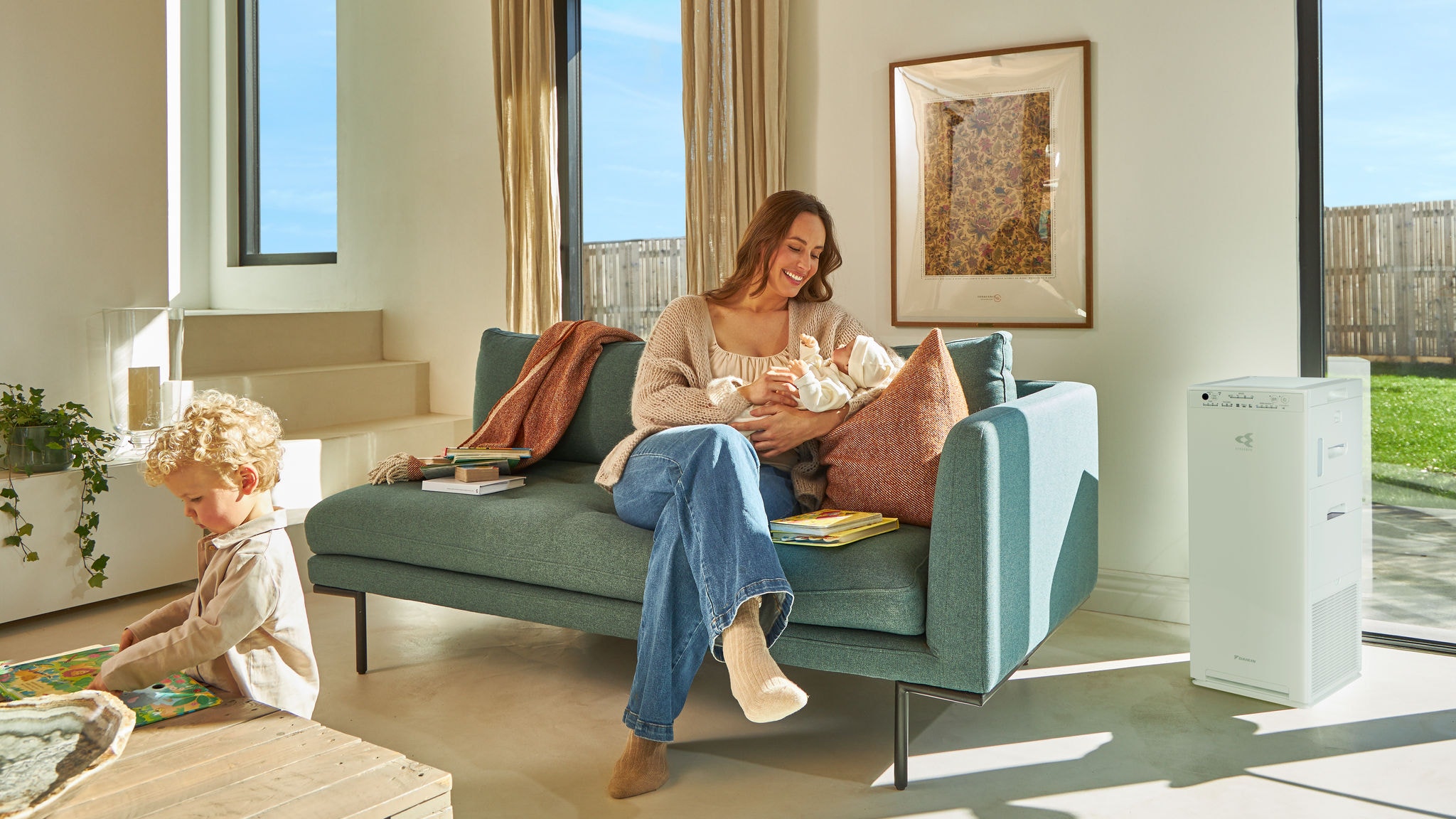
An air purifier in a nursery needs to be positioned at least a metre away from the crib to avoid direct airflow toward the baby and prevent small hands from reaching it, while ensuring unobstructed air intake and exhaust pathways. Ideally, place it off the floor or on a stable surface in an open area. A well-placed unit in a central location allows optimal air circulation throughout the nursery.
For best performance, run the purifier continuously, especially overnight: continuous filtration helps maintain consistent air quality as infants are most vulnerable during sleep. Alternatively, use timed modes if the model supports them, ensuring at least 2–3 air changes per hour in an occupied room.
Keeping surfaces dust-free, keeping windows closed during use of the air purifier, and avoiding smoke or harsh cleaning fumes indoors also support purifier efficiency over time.
Together, thoughtful placement, continuous operation, and routine upkeep ensure optimal purification and safety in your baby’s room.
Common concerns parents have about air purifiers
Will an air purifier disturb my baby's sleep?
Parents often worry that air purifiers produce noise that might disturb baby sleep—but models tailored to nurseries typically run at under 50 dB, often around 30–44 dB in sleep mode, which is similar to soft background noise rather than disruptive sound.
Will an air purifier dry out the nursery air?
Another concern is that air purifiers might dry out the nursery air; however, since these devices only recirculate room air through filters and do not dehumidify or heat the air, they generally do not significantly impact humidity levels. Also, some air purifiers offer a humidifying option.
Is it safe to leave the air purifier running overnight in the nursery?
Parents also frequently ask whether it’s safe to leave the unit running overnight—yes, continuous overnight use is considered safe and even recommended, especially when devices are certified ozone-free and quiet.
Can I stop vacuuming if I have an air purifier?
Rather than replacing cleaning, purifiers should complement tasks like dusting, vacuuming, and laundering bedding to reduce particulate sources in the first place. Devices with filter-change reminders and easy maintenance help keep performance high without burdening parents with guesswork.
Ultimately, air purifiers offer peace of mind without posing additional health concerns.
Complementary methods to improve nursery air quality
Natural ventilation plays a key role in nursery air quality. Opening a window for 10–15 minutes daily, when outdoor air quality is good, helps dilute indoor pollutants without relying solely on purification devices.
Selecting low- or no-Volatile Organic Compounds (VOC) paints and furniture can dramatically reduce off-gassing: volatile organic compounds can linger for months and irritate still-developing lungs, so opting for certified low-VOC products offers long-term benefits. Minimising or eliminating VOC-emitting items, like air fresheners, new carpets, or scented cleaning agents, reduces chemical irritants in the air, allowing filtration to focus on particles and mould.
Pair ventilation, non-toxic materials, and routine cleaning with an electrostatic HEPA+carbon filter purifier to capture remaining dust and VOCs. In combination, these layered strategies create a nursery atmosphere that supports both short-term comfort and long-term respiratory health.
Signs your nursery might need an air purifier
Look out for these indicators that your baby's nursery might benefit from an air purifier:
- Dust accumulating visibly within hours of cleaning, even on smooth surfaces or on windowsills
- Family history of allergies or asthma - babies born into such households are statistically at higher risk of developing respiratory sensitivities, making early air quality control especially valuable.
- Frequent or persistent sneezing, coughing, congestion, or skin irritation in your infant, even without a diagnosed allergy
- Recent home renovations or new furniture that can have introduced VOCs and dust
- Problematic outdoor pollution sources (like high traffic, pollen, or smoke)
Even in well-kept nurseries, real-time air quality sensors can reveal fluctuations parents may not notice, indicating the need for continuous or scheduled purification. These signals collectively justify investing in a calibrated air purification solution to support a cleaner nursery environment.
Final thoughts: investing in your baby’s health
A high-quality air purifier, especially with HEPA and deodorizing filters, significantly reduces allergens, mould spores, VOCs, and fine particles. Cleaner air during infancy and early childhood supports respiratory health, calmer sleep, and may lower allergy or asthma risks. Combined with smart practices like non-toxic materials, mechanical ventilation, and cleaning routines, air purification becomes part of a holistic approach to a healthy home environment. It not only eases immediate congestion and irritants but also represents a proactive investment in your child’s long-term health.
Key takeaways
- The air your baby breathes in their nursery can have a profound impact on their immediate comfort and long-term health.
- Cleaner nursery air can aid sleep: fewer sneezes or congestion episodes help babies rest more soundly and longer.
- Combine ventilation, non-toxic materials, routine cleaning, and an air purifier to create a nursery that promotes both immediate comfort and long-term respiratory health.
- Daikin air purifiers are considered safe for newborns.
- Keep the following specifications in mind when considering an air purifier: room size coverage, HEPA filter inclusion, filter level, noise level, filter change indication and maintenance use.
Ready to create healthier air for your baby’s room?