How to choose a bedroom air conditioner
What to consider for quiet, efficient bedroom cooling and better sleep

Choosing the right air conditioner for your bedroom is essential for comfortable sleep and efficient energy use. The ideal system should be quiet, correctly sized and well positioned to avoid direct airflow while maintaining even cooling or heating. Maintenance also plays an important role in long-term performance. For renters, portable units offer flexibility, while homeowners often benefit from fixed split air-to-air heat pumps, which provide quieter operation, better efficiency and consistent comfort throughout the night.
Why bedroom air conditioning matters for sleep and comfort
When we think of the bedroom, the image is usually one of tranquillity, rest and regeneration. Yet many bedrooms suffer from poor ventilation, excess heat or humidity, which can undermine sleep quality.
A properly sized modern air-to-air heat pump system does more than simply cool or heat the room. It also filters airborne particles and maintains consistent airflow, helping create a healthier indoor environment.
Poorly ventilated or over- or under-heated bedrooms can lead to restless nights, increased wake-ups and lower overall sleep quality. Research links these factors to reduced daytime performance and longer-term health risks. For example, high humidity and heat interfere with the body’s thermoregulation and may increase allergen load in indoor air.
By investing in a bedroom-specific cooling and heating solution, you are targeting not only comfort but also health and sleep resilience. With summer heatwaves becoming more frequent, even traditionally cool bedrooms are under pressure.
What makes a bedroom air conditioner different?
A bedroom air conditioning unit must meet stricter comfort requirements than one used in a living room or open-plan area. Bedrooms require stable temperatures without disturbance, meaning a focus on quiet operation, compact design and energy efficiency.
Quiet operation
Peaks in noise disrupt sleep cycles and reduce rest quality. Sleep experts recommend air conditioners that operate ideally between 19–30 dB, similar to a whisper or rustling leaves.
Wall-mounted air-to-air heat pumps are often barely audible at night, while portable units tend to be louder — closer to a normal conversation — which may disturb light sleepers.
Right fit for bedroom spaces
Bedrooms often have limited wall or ceiling space, so indoor and outdoor units must remain discreet and efficient.
Night-time usage
Because bedroom air conditioning often runs for 6–8 hours overnight, efficiency becomes critical. Air-to-air heat pumps with A+++ ratings consume up to 30% less electricity than other units. Many units include features designed for night-time comfort:
- Econo Mode reduces power consumption while maintaining stable indoor comfort. It limits maximum output for efficient operation and helps prevent circuit overload when other appliances are running.
- Indoor Unit Quiet Operation lowers the operating noise of the indoor unit, making it ideal for night-time use and sleeping areas.
- Outdoor Unit Quiet Operation reduces noise from the outdoor unit during night-time hours, helping minimise disturbance for occupants and neighbours.
Comfort is further enhanced through technologies such as the Coanda effect, which directs airflow along walls or ceilings rather than directly at occupants. Combined with intelligent thermal sensors that continuously monitor room conditions, this ensures more even temperature distribution, precise airflow control, and a consistently comfortable sleeping environment.
In short, a bedroom unit is about dedicated comfort rather than general cooling.
Understanding bedroom heating and cooling capacity
Accurate sizing ensures comfort, efficiency and cost control. To determine the right system size, match your room area with the correct kW capacity. Daikin’s Heat Pump Calculator provides tailored sizing recommendations to help you work it out.
A unit that is too small will run continuously, while an oversized unit may short-cycle and operate inefficiently.
Other factors affecting sizing include:
- room size and ceiling height
- window size and orientation (south-facing or large glazed areas increase cooling demand)
- insulation quality
- the number of occupants and heat-generating devices in the room
As a rule of thumb, most bedrooms require around 0.1 kW per m² for average ceiling heights and insulation. Installers with professional sizing tools will advise you on the right size for your bedroom based on usage, climate, and your building.
Types of air conditioners for bedrooms
There are several types of air conditioners suitable for bedrooms, each with different advantages depending on your home, usage and installation possibilities:
- Air-to-air heat pumps (split systems): These systems consist of an indoor unit and an outdoor compressor. They offer high energy efficiency, quiet operation and consistent temperature control, making them one of the most suitable options for bedrooms. However, they require fixed professional installation.
- Ductless multi-split systems: A multi-split system connects multiple indoor units to a single outdoor unit, allowing you to control the temperature in different rooms independently. This is a good solution for larger homes or when you want to condition several bedrooms while saving outdoor space.
- Portable air conditioners: Portable units can be easily moved between rooms and require minimal installation. They are suitable for renters or temporary use, but tend to be louder and less energy-efficient than fixed systems.
- Window units: These compact systems are installed directly in a window or wall opening and combine all components in a single unit. They are relatively simple and affordable, but can be noisier and less energy-efficient, and are less common in Europe due to aesthetic and installation constraints.
For rentals or temporary use, portable units can be a practical solution. However, for homeowners seeking long-term comfort, energy efficiency and quieter operation, fixed split or multi-split air-to-air systems are typically the preferred choice.
Air-to-air heat pumps: quiet and powerful
Air-to-air heat pumps operate by having an indoor evaporator unit and an outdoor compressor/condenser. The indoor unit quietly blows the cooled air into the room, while the outdoor unit expels heat.
Leave the noise outside
As the noisy compressor is outside, indoor sound levels are lower, which is a key benefit for a bedroom environment. If you own your property, a fixed split system is typically the right choice in the bedroom for comfort, reduced noise, better temperature control and lower running costs.
Discreet design
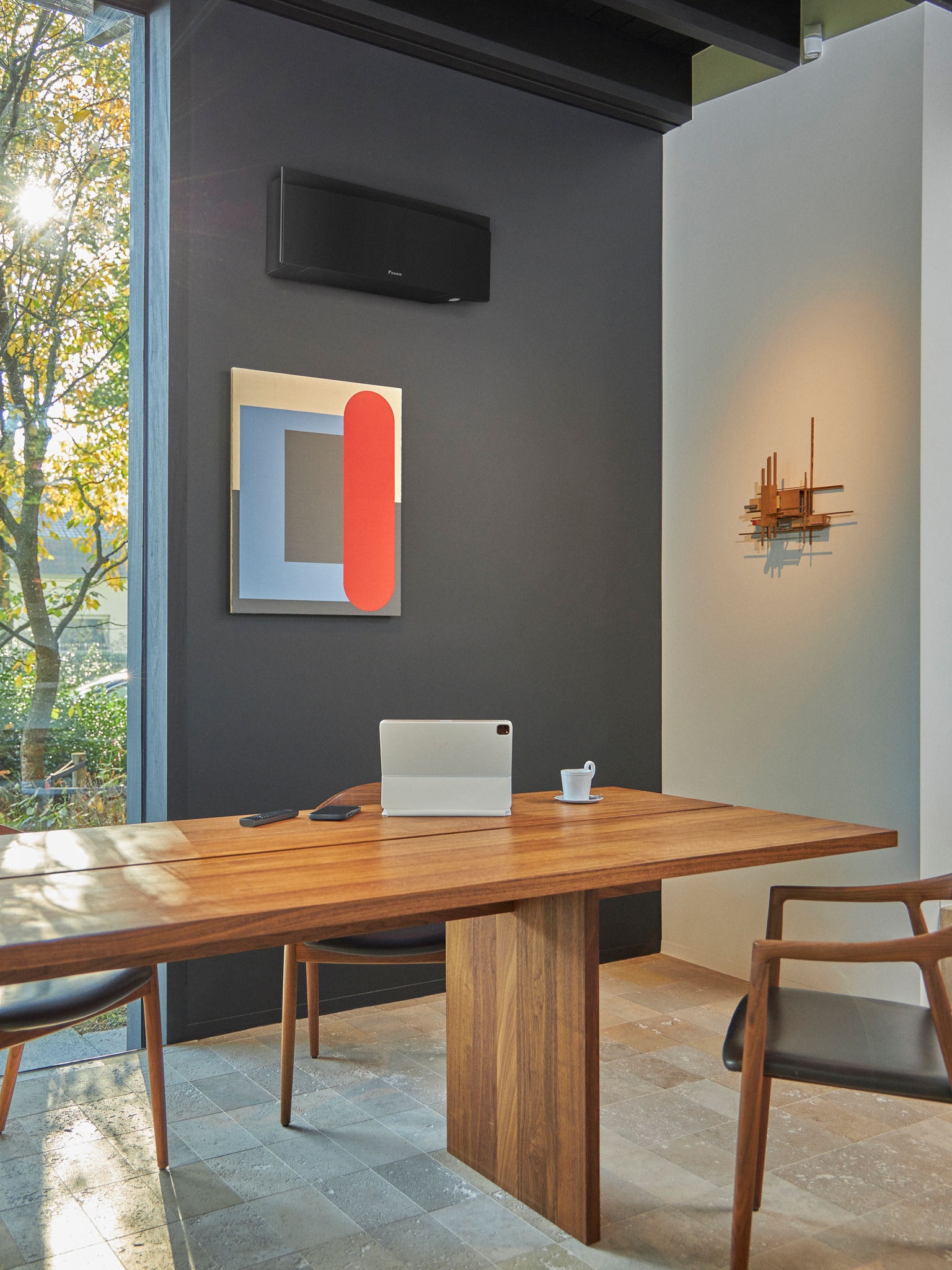
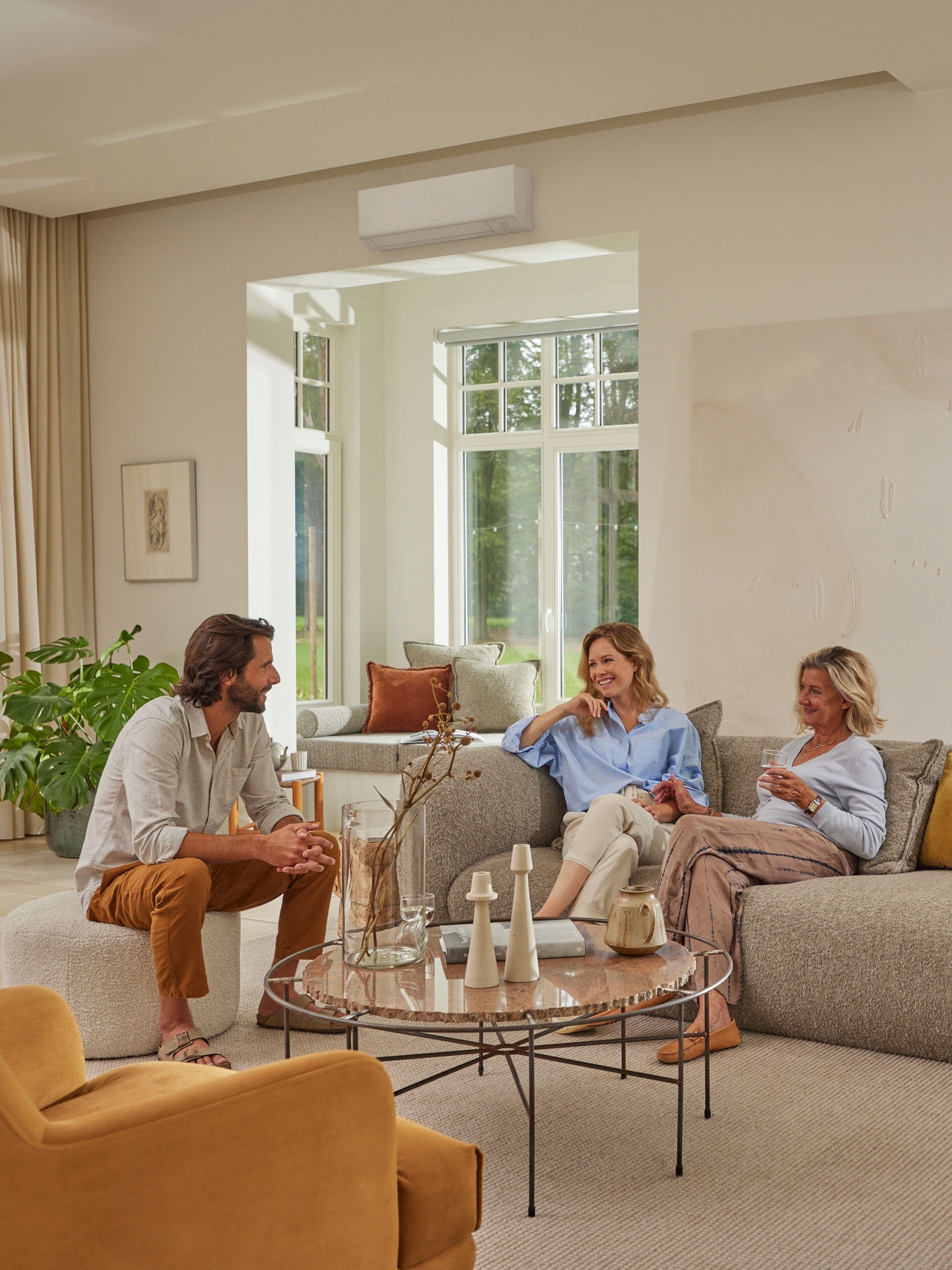
Wall-mounted air-to-air heat pumps, typically part of a split system, feature a slim, compact design, making them easy to integrate into bedroom interiors. If you have limited floor space and prize aesthetics and quietness, then this is the right option for you.
Professional installation
These systems require professional fitting, including refrigerant piping, outdoor unit mounting, and commissioning.
Long-term solution
We recommend fixed split and multi-split systems as the benchmark for bedroom comfort and design integration. Portable units have their place as temporary or secondary solutions, making them ideal for renters or occasional use. However, for homeowners seeking long-term comfort, energy efficiency and seamless design integration, fixed air-to-air systems are typically the preferred choice.
Portable air conditioners: flexible and functional
Portable air conditioners require minimal installation: you simply position the unit in the room, plug in, and vent the hot air via a hose through a window or sliding door. This flexibility makes them suitable for renters, short-term accommodation or rooms where split installation is not feasible. For small bedrooms or transitional use, they serve their purpose.
Smart features for bedroom comfort
Modern air conditioning units increasingly include smart features that enhance usability and comfort, especially in bedrooms.
- Wi-Fi control and apps, such as Daikin’s Onecta app, allow you to schedule temperature changes or turn the unit on remotely, ensuring the room is cool or warm on arrival.
- Some systems also feature temperature sensors or occupancy detection, which adjust airflow automatically.
- For example, scheduling the unit to reduce cooling as you fall asleep helps maintain a steady 18–20 °C overnight (recommended for sleep) while minimising energy use.
- Integration with smart home systems enables voice control and seamless automation. In a bedroom environment — where consistent temperature, quiet operation and convenience are key — these features support restful sleep and more efficient energy use.
Choosing a unit with advanced controls makes your air conditioning system more responsive, efficient and better suited to bedroom comfort.
Noise matters in bedroom air conditioning
For bedroom use, noise levels are perhaps as important as cooling capacity. Experts recommend indoor unit sound levels below 40 dB for uninterrupted sleep (approximately the sound of a quiet library). Some units listed for bedroom use, like Daikin’s Emura, Stylish and Perfera perform at a whisper-quiet level which achieves as low as 19 dB.
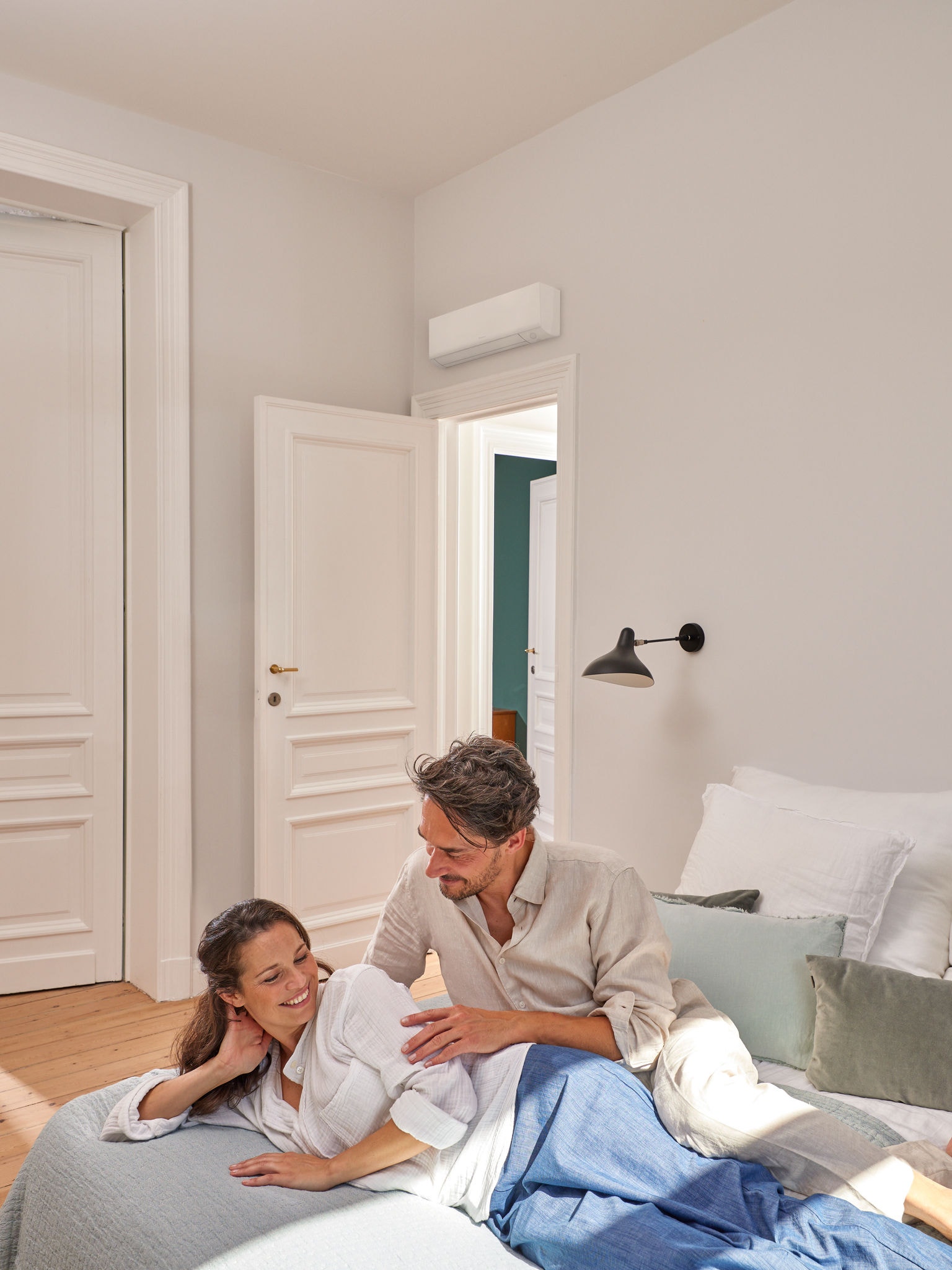
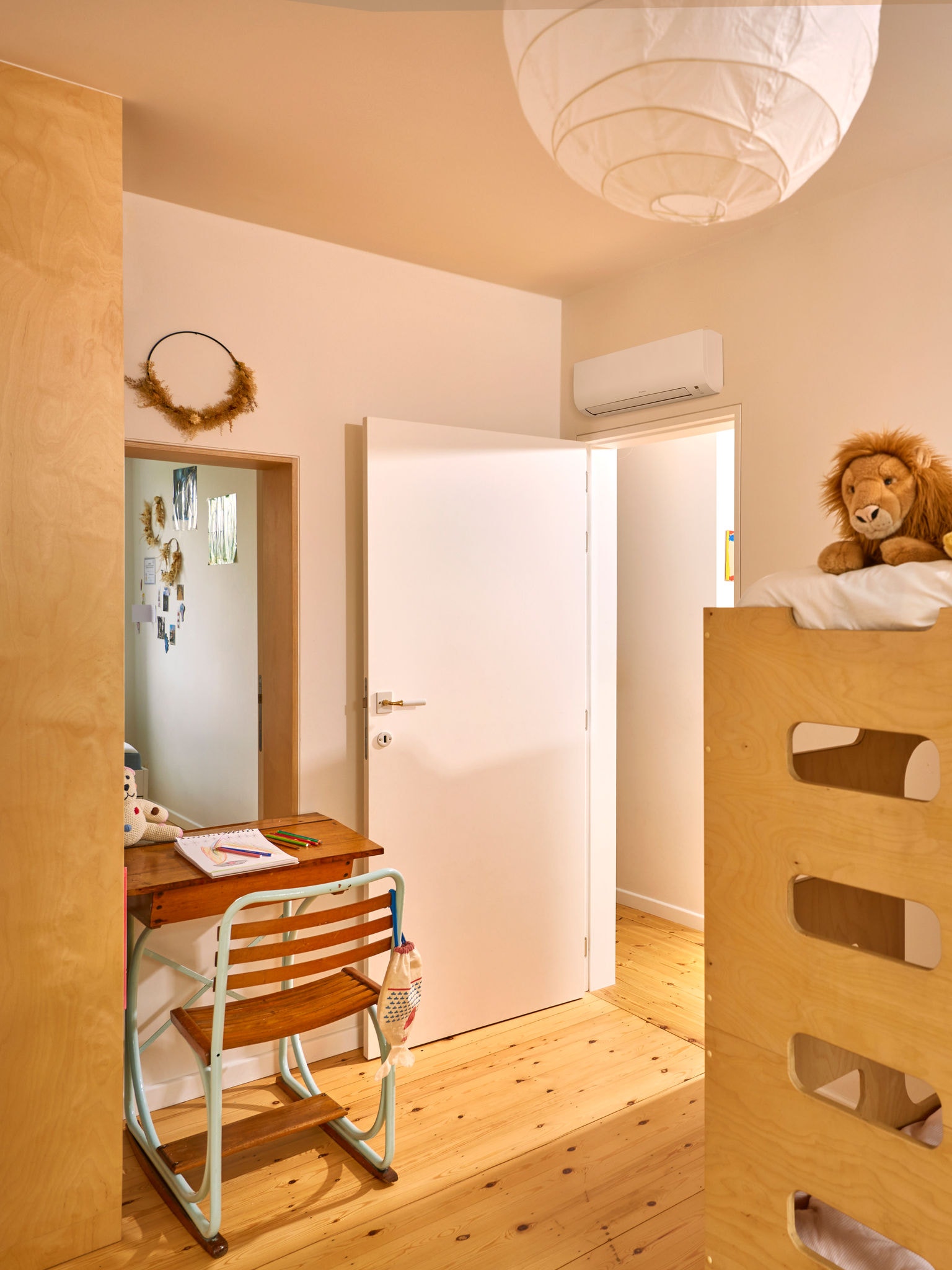
When choosing a system, consider both indoor and outdoor unit sound levels. Placement strategies also help: mount the indoor unit high on a wall facing away from the bed to minimise the direct airflow and allow sound to diffuse.
If sound pressure is too high, it can disrupt sleep — or lead you to switch the unit off, defeating its purpose. For bedroom use, choosing a unit with dedicated night-time modes adds real value. Clear sound pressure ratings (in dB) are also a reliable indicator when comparing performance.
Energy efficiency and environmental impact
Energy efficiency in air conditioning is defined by metrics such as SEER (Seasonal Energy Efficiency Ratio) and SCOP (Seasonal Coefficient of Performance), which measure the cooling output per unit of electrical input.
Inverter-technology units, where the compressor speed adapts to demand, deliver significant gains, less start/stop cycling, quieter operation and lower electricity bills.
As a general rule, every degree lower than the recommended room temperature (in a cooling scenario) can increase energy use by up to 8-10%.
By selecting a high-efficiency unit (A++ or better rating) and matching size to load, the environmental footprint is reduced and running costs fall. In a bedroom context, where the system may operate nightly over summer months, these savings accumulate.
Cost-conscious and environmentally-aware consumers may also want to consider longer term strategies for minimising the amount of electricity they use to keep cool.
Placement and design considerations
In a bedroom, the air conditioning system should integrate with the décor, to maintain the look of a calm restful room. Positioning matters: install the indoor unit high on a wall above eye-level, away from direct sunlight and avoiding areas above the bed (to prevent cold air blowing directly on sleepers).
Daikin Emura and Stylish models provide aesthetic appeal alongside efficiency.
Installation and cost considerations
When planning bedroom air conditioning, understanding the cost breakdown is essential.
- Air-to-air heat pumps, which include an indoor and outdoor unit, typically cost around £3,000, including professional installation.
- Portable units offer the lowest upfront cost, with prices between £470–£940, though these do not include installation since they are plug-and-play.
It is crucial to choose installers for fixed systems to ensure compliance with refrigerant handling regulations and to protect the warranty. Proper installation guarantees optimal efficiency, quieter operation, and long-term reliability. Homeowners should also verify warranty coverage, with annual servicing often required to maintain validity.
For those seeking professional guidance, you can find Sustainable Home Specialists and warranty details on the Daikin website.
Maintaining your bedroom air conditioner
Routine maintenance ensures your bedroom air conditioner continues to deliver comfort and efficiency over time. Simple tasks include cleaning or replacing the indoor filters monthly during periods of heavy use, as well as wiping down the indoor unit surfaces to prevent dust build-up.
Many manufacturers also recommend an annual comprehensive service by a qualified technician, including checks of refrigerant charge, airflow performance, electrical connections and drainage. Regular servicing helps maintain optimal performance and extends the lifespan of the system.
Owners should watch for early signs like reduced airflow, unusual or unpleasant smells, or increased energy use. These can indicate the system needs professional attention. Ignoring maintenance may lead to reduced cooling capacity, higher noise levels and increased power consumption. By integrating your AC unit into a regular maintenance schedule (e.g., a spring check-up before the warmest months), you protect your investment and ensure long-term reliability.
Even well-maintained systems can occasionally develop issues. Common problems include strange noises, insufficient cooling or musty odours.
- If you hear a buzzing or vibrating sound, check whether indoor unit panels are securely fixed.
- If cooling seems weak, ensure the filters are clean, the vents are unobstructed and the thermostat is set correctly to “cool” mode.
- If the unit smells musty, the drainage tray may need cleaning, or there could be microbial growth in the unit.
If problems persist, it is recommended to contact a qualified service engineer for further inspection and repair.
Final thoughts: investing in sleep comfort
Choosing the right air conditioning solution for your bedroom isn’t just about surviving hot or cold nights - it’s an investment in better sleep, improved comfort and long-term efficiency.
Key takeaways
- Choose a unit correctly sized for your bedroom
- Prioritise quiet operation (low dB levels)
- Consider energy efficiency for overnight use
- Ensure the system fits your room layout and design
Explore air conditioning solutions designed for quiet, efficient comfort and better sleep in every room of your home.