Air-to-water heat pump costs: what to expect and how to save money
Understand the real installation costs, incentives and long-term savings before investing in low-carbon heating
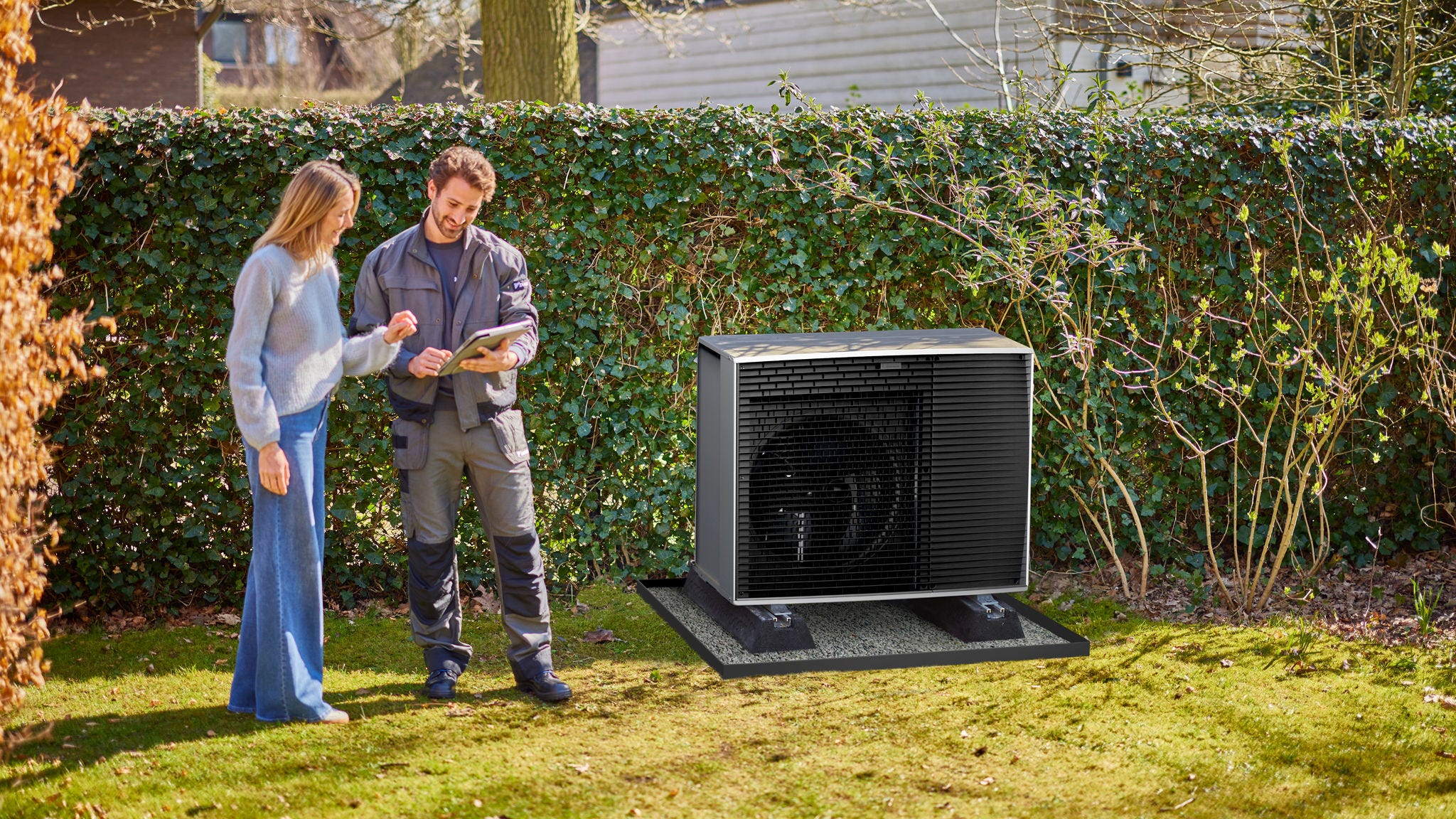
Air-to-water (A2W) heat pumps typically cost around £12,500 to install before any government incentives. The actual cost depends on a number of factors including home size, insulation and if any electrical upgrades are required. While upfront costs are higher than a gas boiler, incentives and long-term energy savings can offset the investment. In this guide, you’ll see what’s included in the price, where extra costs arise and how to estimate potential savings.
Why are heat pumps rising in popularity?
Heat pumps are now central to national decarbonisation strategies and increasingly chosen by households seeking to escape volatile gas and oil tariffs. As well as the potential benefits of reducing reliance on fossil fuels for heating, an air-to-water heat pump can offer savings on energy costs over time, depending on factors such as local energy tariffs, climate and available incentives. However, it’s still important to understand both the up-front costs and any extras you may not have thought of, so you can budget appropriately in order to transform your heating system for the better.
What is an air-to-water heat pump?
Air-to-water (A2W) heat pumps transfer energy from the outside air into your house. The outdoor unit will exchange energy from the outdoor air and with the help of the refrigerant cycle, it releases the energy at a higher (or lower) temperature to generate space heating (or cooling) and hot water.
Unlike traditional boilers, which burn fossil fuel, A2W heat pumps run on electricity and transfer rather than generate heat, delivering significantly better environmental and efficiency benefits.
Understanding the science behind the statistics
The average efficiency of a heating system is measured by its seasonal coefficient of performance (SCOP). A SCOP of 3 means the system produces 3kW of heating for every 1kW of electrical power consumed on average over the year. The higher the SCOP the better the performance and higher the savings.
Depending on the model and the conditions, Daikin Altherma air-to-water heat pump delivers between 3 and 5 kWh of usable heat for every kWh of electricity it uses. So this means around 60–80% of the heat delivered comes from ambient heat in the air.
Studies show that air-source heat pumps can significantly reduce CO₂ emissions compared with conventional gas boilers. A life-cycle assessment across 18 European countries found an average 54% reduction in climate impact for recent dwellings.[1]
As national building-regulations tighten and fossil-fuel heating becomes less viable, air-to-water heat pumps are gaining traction as the mainstream heating-option for low-carbon homes. The logic: invest more upfront, and benefit from lower running costs, lower emissions and future-proof infrastructure.
So now you can see why you should get an air-to-water heat pump, let’s get down to the nitty gritty and look at how much you can expect to spend.
Typical installation costs across Europe
The following examples illustrate typical installation scenarios across Europe.
Central Europe (benchmark case)
In a typical three-bedroom suburban home in central Europe, the chosen system is an 8 kW Daikin Altherma air-source heat pump, a standard capacity for well-insulated mid-size homes. The total installation quotation amounts to around €13,800. This price covers the equipment, labour, minor electrical upgrades, and commissioning, but excludes optional extras like solar PV integration or buffer tanks. This example serves as a realistic mid-range benchmark for most European homeowners.
Nordic example (cold climate scenario)
In southern Sweden, where the average temperature in winter is an extremely chilly –5 °C, a four-bedroom detached home requires a higher-capacity 12 kW - system. Here, the total installed cost typically reaches €16,000 - €18,000, reflecting the need for a more powerful heat pump, a larger domestic hot water tank, and additional insulation. However, homeowners benefit from substantial government incentives, such as Sweden’s ROT tax deduction, which can reduce labour costs by up to 30%, bringing the net outlay closer to €13,000. [2]
Southern Europe (mild climate scenario)
In contrast, a three-bedroom home in northern Spain or Italy can operate efficiently with a 6 kW unit, thanks to milder winters (average 5-10 °C). Installation costs are lower, typically between €10,000 and €11,500, as less water storage is required. In these regions, combining the A2W heat pump with solar PV panels is increasingly common, potentially reducing electricity costs by 30-40% over the year. Local incentives, such as Italy’s Superbonus 65% or Spain’s NextGenerationEU grants, further lower total household expenditure.
Step-by-step cost breakdown: from survey to commissioning
Step 1: Home survey, heat-loss calculation & system design
What happens
- Full heat-loss calculation to size the heat pump correctly
- Review of existing heating system (boiler, radiators, underfloor heating)
- Check insulation levels (loft, walls, floors)
- Assessment of outdoor unit location, noise, airflow, and electrical supply
- Final system design and heat-pump sizing (e.g. 8 kW vs 11 kW)
Typical costs
- Survey: €175–€350 (often deducted if you proceed)
- Design & sizing: €350–€700
Why it matters
- Under-sizing = poor comfort & high running costs
- Over-sizing = wasted capital & inefficient operation
Homeowners should receive
- Heat-pump size (kW)
- Design conditions (e.g. –5°C outdoor, 35°C flow temp)
- Clear justification for the chosen system
Step 2: Heat pump model selection & electrical preparation
What is decided
- Heat pump brand and model
- Capacity (kW) and SCOP efficiency rating
- Cold-weather performance and max flow temperature
- Noise level, warranty, and hot-water capability
Electrical works
- Dedicated circuit from fuse board
- Possible consumer unit upgrade
- Outdoor unit supply and surge protection
Typical electrical costs
- €585–€1,405 depending on upgrades needed
Key checks
- Is electrical work included in the main quote or separate?
- Is grid capacity sufficient for startup load?
- Are future electrical surprises clearly ruled out?
Step 3: Outdoor & indoor installation + heating integration
Outdoor unit
- Wall brackets or concrete base
- Anti-vibration pads
- Correct spacing for airflow and noise compliance
- Typical cost: €410–€700
Indoor unit & heating system
- Hydraulic indoor unit installation
- Domestic hot-water tank (if required, e.g. 200 L)
- Smart controls / weather compensation
- Pipework adjustments and insulation
- Radiator upgrades if existing emitters are undersized
Typical combined costs
- Hot-water & controls: €940–€1,640
- Pipework & heating changes: €700–€1,405
Main cost risks
- Radiator replacements are a major cost variable
- Older homes often need more pipework upgrades
Step 4: Commissioning, testing & handover
What is included
- Pressure and electrical testing
- Control programming and optimisation
- Performance checks
- Commissioning certificate
- Homeowner training and warranty registration
Why this stage is critical
- Ensures the system performs as designed
- Required for warranty validity
- Poor commissioning can erase efficiency gains
Questions to ask
- Who issues the commissioning certificate?
- Are performance settings guaranteed?
- Is follow-up support included?
Air-to-water heating cost calculator
Here’s a quick scan-friendly table summarising typical cost ranges for an air-to-water heat pump, although they can obviously differ depending on the country
|
Step |
Average cost |
|
Survey & consultation |
€175-€350 |
|
Design & sizing |
€350-€700 |
|
Heat pump unit (equipment) |
€5,300-€8,800 |
|
Electrical upgrades |
€585-€1,405 |
|
Outdoor unit installation |
€410-€700 |
|
Hot water cylinder & controls |
€940-€1,640 |
|
Pipework & wet system adjustments |
€700-€1,405 |
|
Total |
€8460 - €15000 |
Total typical range for a three-bed home: around €8460 - €15000 before factoring house-specific complexity, optional upgrades or large-home sizing.
Beyond the baseline tasks above, some optional elements can increase the total installation cost. These should be clearly identified in your quotation so you understand what is included in the base price and what counts as an add-on.
- Smart-home integrations: Home automation systems, remote monitoring and tariff-shifting controls can improve comfort and efficiency, but may increase upfront costs.
- Solar PV integration: If you pair your heat pump with solar panels, the initial investment rises, but long-term electricity savings can improve.
- Radiator replacement or underfloor heating retrofit: Upgrading heat emitters to suit lower flow temperatures can represent a significant additional cost, particularly in older homes.
Each of these items should be quoted separately (or clearly flagged) so you can assess whether the “base” installation reflects your actual needs or whether additional work will apply.


Grants, incentives, and financing options available
Across Europe, the incentive landscape varies widely by country, from tax credits and interest-free loans to subsidised energy tariffs.
In addition, green financing options, such as low-interest loans, green mortgages, or bundled packages combining equipment and installation, are becoming increasingly available. Homeowners are encouraged to discuss payment plans directly with installers.
Given that incentives and eligibility criteria differ between markets, both installers and homeowners should carefully check conditions (for example, insulation standards, installer certification, or property type) to avoid unexpected disqualifications.
Ongoing maintenance and servicing costs after installation
Once the system is operational, maintenance is relatively modest: annual servicing typically falls in the range of 175-€295, covering checks of refrigerant levels, outdoor unit fan, controller calibration and general service.
The typical lifespan of a well-installed A2W heat pump is 15-20 years or more, with some components (e.g., compressors) able to run for 20+ years if maintenance is kept up.
Service agreements or extended warranties may also be offered (and recommended) by manufacturers or installers, which can add annual cost but reduce risk of failure. Homeowners should ensure what the warranty covers (compressor, refrigerant, controls) and what servicing they must undertake to maintain warranty validity.
Regular servicing helps ensure the system continues to deliver the SCOP assumed in cost calculations and helps preserve long-term savings potential.
Comparing heat pump installation costs vs. traditional gas boilers
For context, the average cost of installing a new gas boiler is around €2,340-€4,095 for a standard mid-sized home.
An air-to-water heat pump typically has a higher upfront installation cost than a gas boiler, but its running costs can be lower depending on factors such as local electricity and gas prices, the energy efficiency of the home and how the system is used. According to the European Commission, switching from a gas boiler to a heat pump can reduce a household’s heating bill by 20% to over 60% in the EU, depending on local energy prices and the energy efficiency of the home.[3]
This means that the overall cost of switching should be considered alongside the initial investment. The potential payback period will depend on the installation cost, annual energy savings, local energy prices, available incentives and the performance of the system in the home.
How much can you expect to save on energy bills with a heat pump?
We performed a simulation exercise to work out how much you could expect to save on your heating bills over a 10-year period by running a heat pump compared to a gas boiler in a mid-sized, newly renovated house.
The results tell a compelling story. They show that using a heat pump instead of a boiler should generate consistent energy savings every year, that grow steadily over time. In fact, over a decade, we estimated a household this size could save around €2600.
Global A2W heat pump models have SCOPs of around 4, making them four times more efficient than traditional gas boilers. Therefore you should frame savings expectations realistically. To exploit the potential for bigger savings, you should have:
- A heat pump sized correctly
- Efficient system (radiators/underfloor heating tailored)
- Favourable electricity tariffs
- Good insulation
Without those, savings may be modest rather than dramatic.
How long does an air-to-water heat pump installation take?
For a typical domestic A2W heat pump installation in a moderate-sized home, a realistic timeline is 2-5 days, depending on complexity (e.g., insulation upgrades, radiator replacement, access issues).
A professional air source heat pump installation timeline typically covers:
- Home survey and heat loss calculation
- System design
- Equipment delivery
- Installation (indoor & outdoor units)
- System commissioning
You should ask your installer for a clear project timeline, outlining key milestones and which professionals are responsible at each stage (for example, the electrician or heating engineer). This improves accountability and helps prevent misunderstandings.
A well-prepared installer will confirm the start date, expected installation period, and commissioning date. Having these details agreed upfront reduces the risk of unexpected delays or cost increases.
Common installation challenges
Minor issues can arise, but they are usually straightforward to resolve:
- Limited outdoor space may restrict unit placement.
Solution: Check acoustics, planning rules and alternative locations early. - Older properties may have complex pipe routes, increasing labour time and affecting efficiency.
Solution: Confirm routing during the survey stage. - Electrical upgrades may be required, which can lead to DNO delays.
Solution: Installers should assess supply capacity before confirming dates.
What do homeowners say after installation?
Several homeowners share similar reflections after their A2W heat pump installation:
- Radiator upgrades matter. Many wish they had replaced smaller radiators with larger low-temperature models to improve efficiency and comfort.
- Outdoor unit placement is crucial. Checking airflow, accessibility and proximity to neighbours early can prevent noise concerns or relocation costs later.
- Expect gradual payback. Most report a longer cost recovery period than initially expected — typically 7–10 years — but value the predictable running costs and environmental benefits.
- Smart controls make a difference. Homeowners using programmable thermostats or weather compensation controls report steadier indoor temperatures and lower energy bills.
Checklist: What you should ask your installer before committing
- Is the survey cost included or separate? What does the survey cover (heat-loss, insulation check, outdoor unit location)?
- Does the quote include electrical upgrades (consumer unit, supply check) or are they extra?
- What heat pump model is being used (brand, kW rating, SCOP/seasonal performance specification, warranty term)?
- Are the existing radiators or underfloor heating system compatible with the lower flow temperature of the heat pump? If not, what upgrades are included?
- Is commissioning included in the installation cost, and will I receive documentation (pressure test, refrigerant check, control set-up)?
- What is the impact on running costs and what performance guarantee (if any) comes with the system?
- How will the outdoor unit be mounted (plinth/bracket), what noise levels are expected, and is planning approval needed?
- What after-sales servicing is required and what is the warranty period? Are service plans offered?
Is an air-to-water heat pump worth the cost?
An air-to-water heat pump involves a higher upfront investment, but for many households it delivers strong long-term value. When correctly sized and installed, incentives and reduced emissions can offset the £12,500 installation cost over time.
With realistic expectations and proper system design, it can be a financially sound and future-proof alternative to a gas boiler.
Key takeaways
- Typical installation costs for an air-to-water heat pump are around £12,500.
- Running costs and savings depend on many factors including insulation, energy tariffs and system design.
- Proper heat-loss calculation and sizing are critical to performance.
- Grants and financing can significantly reduce upfront cost.
- Air-to-water heat pumps offer long-term emissions and energy savings vs gas boilers.