Is a heat pump worth it? Heat pump versus gas boiler costs
Discover the installation and running costs of heat pumps versus gas boilers, as well as their energy efficiency and carbon impact.

Yes, switching to a heat pump is often worth it if you want higher efficiency, as well as a reduced carbon footprint and they can also have lower running costs. Although heat pumps usually cost more to install than gas boilers, they last longer, require less maintenance and use significantly less energy to deliver the same amount of heat. How much you gain depends on installation costs, energy prices and available government incentives.
In this article, we compare heat pumps and gas boilers in terms of installation costs, running costs, energy efficiency and environmental impact to help you decide which option offers the best return on investment for your home.
Heat pump and boiler installation costs
There are different types of heat pumps, so the cost of buying and installing can vary significantly, but they typically cost around £3,000 for an air-to-air heat pump and £10,000 for an air-to-water one. There could be additional costs to consider if you decide to carry out other improvements, such as changing your radiators, or installing extra insulation.
There are various funding options to help homeowners install heat pumps:
Boiler Upgrade Scheme
The Boiler Upgrade Scheme (BUS) is a UK Government incentive covering England and Wales. It supports air-to-water (A2W), ground source and air-to-air (A2A) heat pumps installed for space heating.
Homeowners can receive:
- £7,500 towards an air-to-water or ground source heat pump.
- £2,500 towards an air-to-air heat pump in a residential property.
- £9,000 towards an air-to-water or ground source heat pump in an eligible off-gas-grid property. This temporary uplift is available from 21 July 2026 to 31 March 2027 and covers homes replacing oil, LPG, coal, electric or other fossil fuel heating systems.
The grant is claimed by an MCS-certified installer on your behalf and comes off the price of the installation.
Home Energy Scotland
The Home Energy Scotland Grant and Loan Scheme offers homeowners up to £7,500 as a grant towards a heat pump, plus an optional interest-free loan of up to £7,500. Rural and island homes qualify for an extra £1,500 on both the grant and the loan, taking the maximum grant to £9,000 and total available support to £18,000 when the loan is included.
VAT Savings
VAT on the installation of heat pumps and air conditioning units is currently 0%, saving homeowners hundreds of pounds on a Daikin system. This applies until 31 March 2027, after which a reduced rate of 5% will apply.
From 1 October 2026 to 31 March 2027, VAT on domestic electricity bills is also being cut from 5% to 0%. This will reduce the running costs of any electric heating system, including heat pumps, during that period. Gas bills continue to carry 5% VAT, so the price gap between gas and electricity narrows slightly over the winter, which improves the running-cost comparison in favour of heat pumps.
How gas boiler costs compare
Gas boilers are generally cheaper to install. Typical all-in costs (boiler, parts and labour) range from £2,500 to £4,000+ depending on the complexity of the installation. Moving the boiler to a new location can add another £300 to £800.¹ No government funding is available to install a gas boiler.
Some mortgage lenders also offer cashbacks if you install a heat pump.
Together, the funding options and VAT savings above can have a dramatic effect on the cost of installing a heat pump. In some cases, it brings the price close to the cost of a new gas boiler.
1 Source: Checkatrade
What are the maintenance costs and lifespan?
Another factor in the return on investment equation is how long your heating system will last and how much it costs to maintain and run during that time.
If looked after properly, a heat pump can last 15 to 20 years. Maintenance involves routine checks and cleaning, and typically costs between £150 and £300.
Due to their combustion processes, gas boilers require careful maintenance and servicing, that can cost between £80 and £120 a year. Their average lifespan is 10 to 15 years.
Energy prices and running costs
A heat pump draws up to 75% of its energy from nature for free, with the remainder powered by electricity, while a boiler relies entirely on gas. The comparative running costs therefore depend on the cost of household electricity versus gas.
Particularly in recent years, we’ve seen significant price fluctuations in natural gas, due to geopolitical tensions, market demand and supply chain disruptions. Seasonal and geographical factors also play a part and gas prices may spike during harsh winters.
It’s therefore difficult to predict exactly what will happen with energy prices, but if you install solar PV panels and batteries. Not only will this reduce the cost of running your heat pump, but it will also lower your energy bills. Installing solar PV will not reduce the cost of running a gas boiler.
Some energy providers also offer special heat pump tariffs. These can further reduce the costs of running heat pumps.
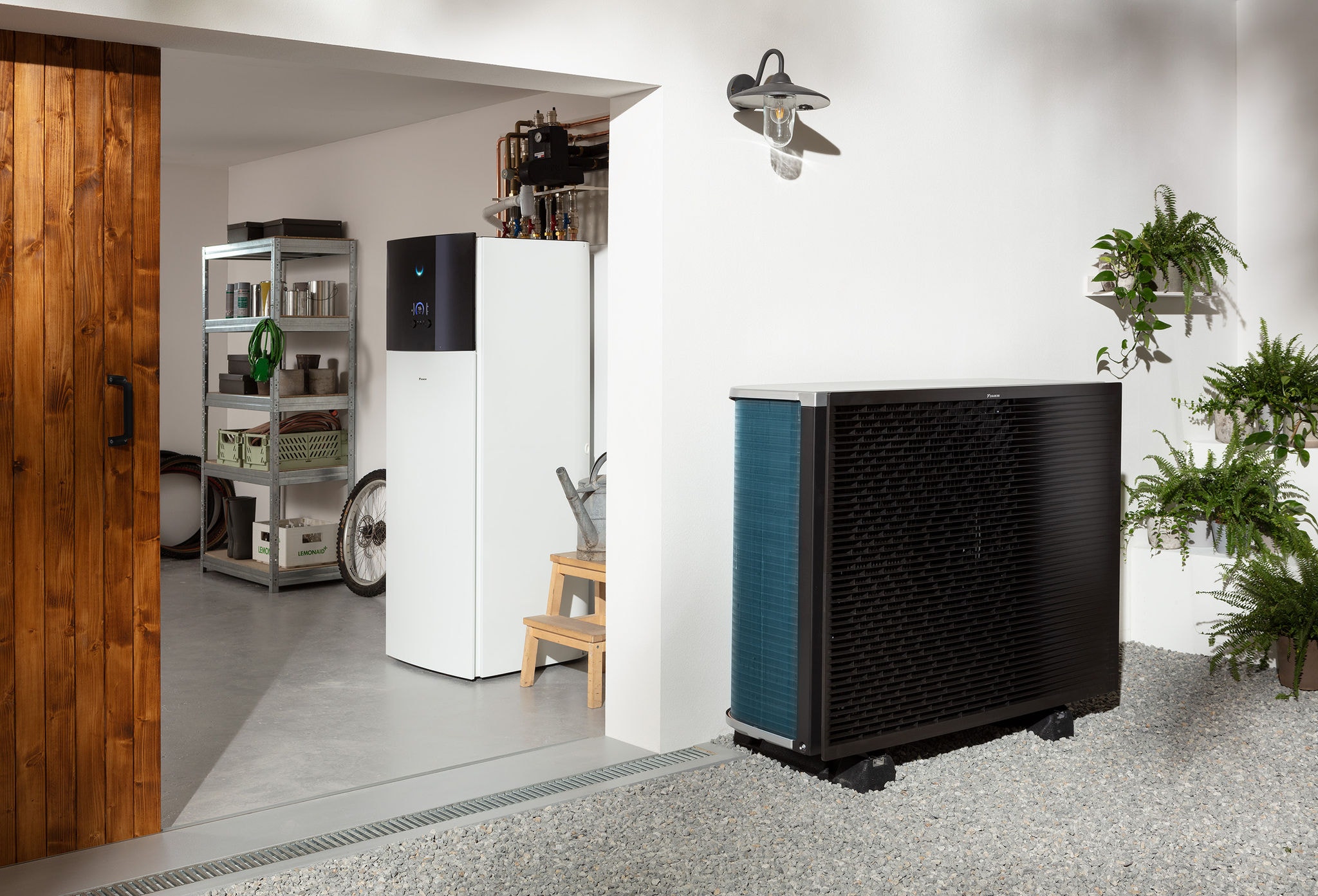
Energy efficiency of gas boilers and heat pumps
It’s not just a case of the unit price of gas or electricity alone, the energy efficiency of a heating system is also an important metric.
A heat pump is capable of converting 300-400% of the energy input into usable heat, and typically produces 3-4kWh of heat from 1kWh of electricity.
For example, 3kWh is enough to:
- Heat a small room for three to four hours
- Provide two 10-minute hot showers
- Toast 9,000 slices of bread!
- Run two dishwasher or laundry cycles
Modern condensing gas boilers typically operate at much lower efficiencies, ranging from 99-109%.
To generate enough usable heat for two 10-minute hot showers etc, even at the higher efficiency of 109%, your boiler would consume 2.75kWh of gas, rather than the heat pump’s 1kWh.
There are times when a gas boiler can be more economical, such as in particularly cold climates, or during the coldest days of winter, but overall, the superior energy efficiency performance of the heat pump is one of its main advantages.
The carbon footprint comparison
Domestic heating in the UK is a significant contributor to greenhouse gas emissions, accounting for 18% of all UK greenhouse gas emissions in 2021 1. The primary source of these emissions is the burning of natural gas for heating purposes.
Boilers rely on burning gas, which releases carbon dioxide (CO₂) emissions. It is estimated that around 2.1 kg of CO₂ is released for every cubic metre of gas used2, contributing directly to greenhouse gas emissions.
Because they take most of their energy from renewable sources, heat pumps have a significantly lower carbon impact. This can be reduced even further when they are powered in conjunction with solar PV and or, with renewable energy tariffs.
According to the Energy Saving Trust, an average three-bedroom home will save 1,900 kg a year of CO₂ with a heat pump compared to a new gas boiler, and 2,900 kg compared to an old gas boiler. This is the equivalent of travelling over 6,884 or 10,500 miles, respectively in a family car.
1 Source: National Audit Office
2 Source: Hannah Ritchie, Pablo Rosado, and Max Roser (2020) - “Greenhouse gas emissions” Published online at OurWorldinData.org
Conclusion: Assessing the overall return on investment
Overall, a heat pump can deliver a strong return on investment due to its longer lifespan, and much higher energy efficiency. Government incentives make a heat pump can be a financially and environmentally appealing choice for many people. So, if you're planning to upgrade your heating system, it could be a good time to make the switch.
Key takeaways
- Heat pumps can be cheaper to run than gas boilers
- Installation cost is higher, but heat pumps last 5-10 years longer.
- Heat pumps have a much lower carbon impact, especially when powered in conjunction with solar PV and by using renewable electricity tariffs.
- Government grants can help reduce installation costs and improve the overall return on investment of heat pumps.
Ready to find out more?
You can find out more about Daikin’s range of heat pumps or if you are ready to install a heat pump you can ask a local Daikin installer to contact you.