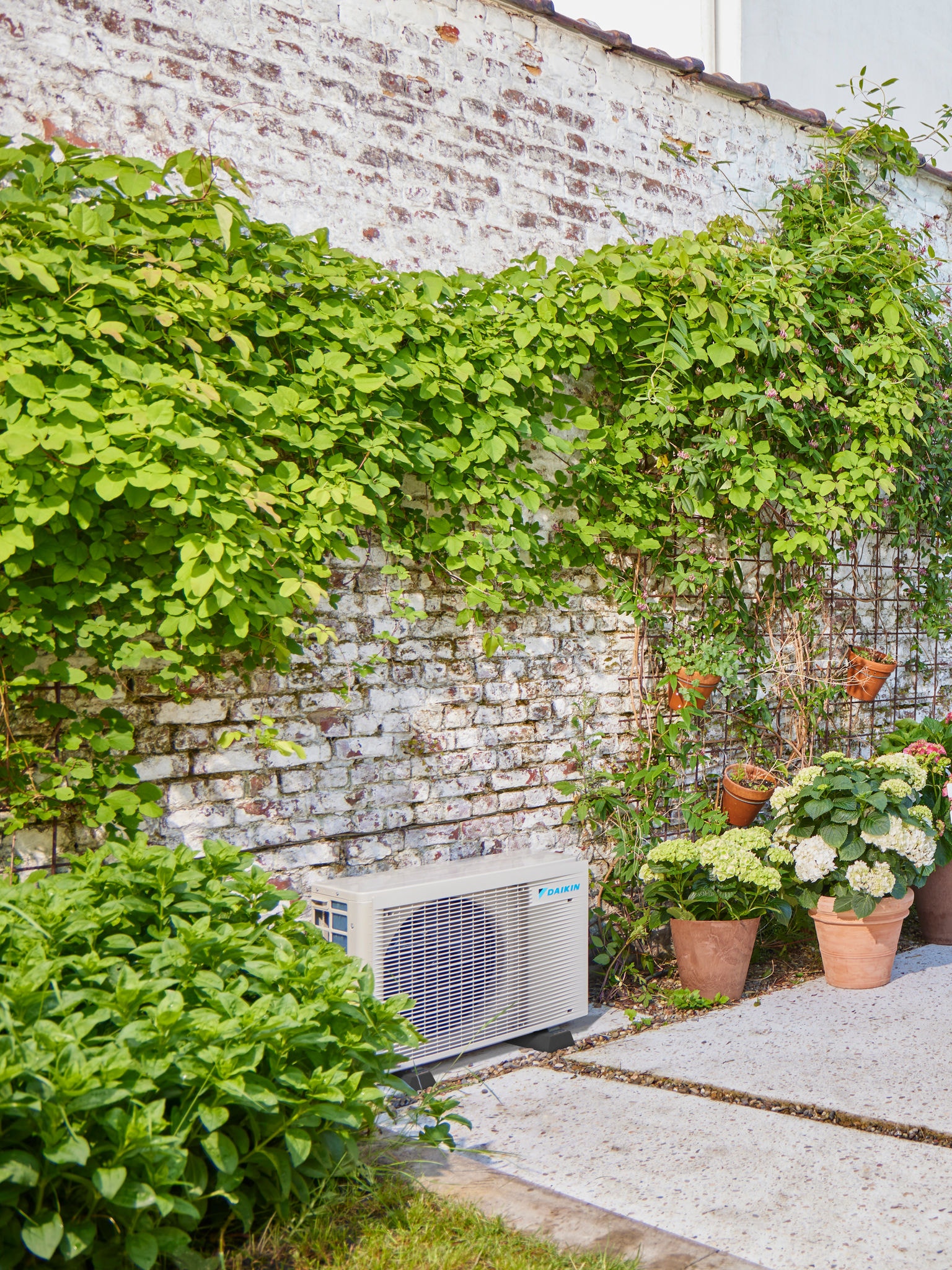
Air source heat pumps for terraced houses: what to consider
Whether you have limited outdoor space or a compact layout, a heat pump can work in your terraced home with the right planning.
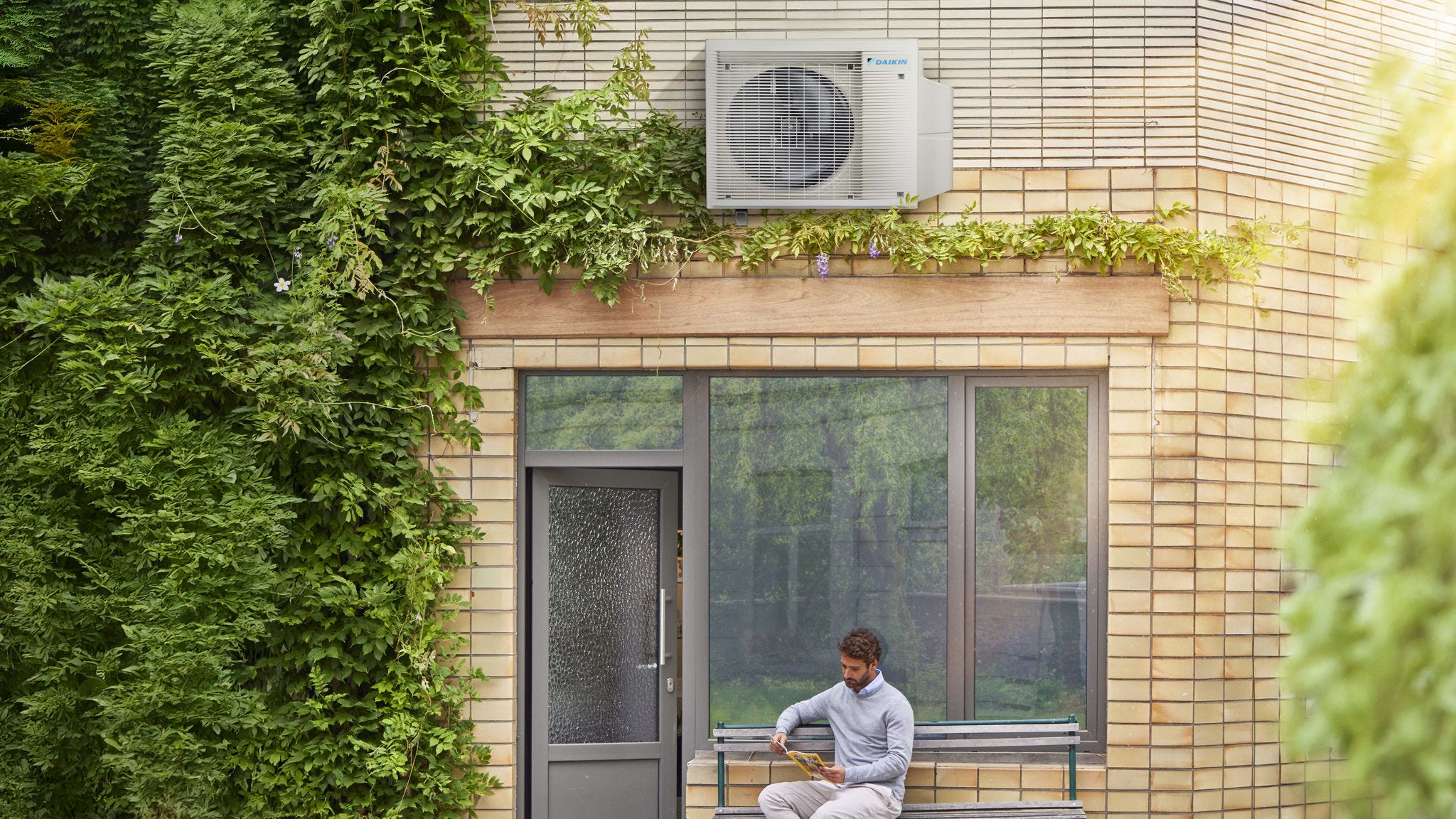
Heat pumps are suitable for all types of homes, including terraced houses, provided that outdoor space, boundary distances and insulation levels are carefully assessed. This guide covers practical considerations from space requirements and regulations through to long-term operation and performance.
Understanding terraced house constraints
Terraced properties present unique installation challenges when it comes to upgrading to a heat pump. Shared party walls create sensitivity around noise and visual intrusion on neighbours. Outdoor space is often limited to small rear gardens, narrow side passages, or compact courtyards.
Ground source heat pumps are rarely practical for terraced houses because they require significant outdoor space for trenches or boreholes. Air source heat pumps, on the other hand, require less space and can be mounted on an external wall or a flat roof, so they are well worth considering for your terraced property.
How an air source heat pump works
Air source heat pumps extract thermal energy from outdoor air and transfer it indoors to provide heating and hot water. A liquid refrigerant absorbs heat from outside, evaporates, then passes through a compressor which raises its temperature before transferring heat to your central heating system.
Heat pumps typically deliver three to four units of heat for every unit of electricity consumed, making them effective even in compact urban properties.
Why an air source heat pump is often the best bet for a terraced house
For terraced properties, air source heat pumps offer distinct advantages. Installation disruption remains minimal, with typical projects completed in two to six days. No boreholes mean gardens stay intact, preserving limited outdoor space.
Running costs can be significantly lower than oil, LPG, electric heating, or old gas boilers when properly sized. The ability to wall-mount outdoor units when ground space is unavailable provides flexibility that ground source systems cannot match. This makes air source units the most practical low-carbon heating choice for urban terraced properties.
Insulation and fabric first principles
The “fabric” of a building refers to its physical structure. If you skip fabric improvements:
- The heat pump must work harder
- Energy bills increase
- Comfort may suffer (rooms feel colder)
Heat pumps perform best in well-insulated homes because they operate at lower water temperatures than gas boilers.
Installers assess your home and determine what improvements are needed, for example increasing radiator size if insulation isn't possible. Loft insulation, draught reduction, and upgraded glazing all improve performance. Heat pumps can work effectively in homes with reasonable thermal efficiency, though better insulation means lower running costs.
Planning and regulatory considerations for heat pump installation
Installing an air source heat pump in a terraced house is possible without full planning permission, but only if specific conditions are met. Understanding these rules prevents delays, disputes with neighbours, and unexpected costs. Below, we clarify what typically applies to terraced properties and when additional approval may be required.
Permitted development: when planning permission is not required
Permitted development rights allow homeowners to install heat pumps without formal planning permission, as long as certain conditions are met. The most important condition for terraced homes is keeping the unit at least one metre away from property boundaries. Local planning authorities interpret these rules differently, so it is essential to check your area.
These rights can be withdrawn in conservation zones, national parks, or around listed buildings. Understanding whether your installation qualifies shapes both timeline and cost significantly. Most terraced homes fall under permitted development when boundary distances can be achieved.
The one-metre rule
The one-metre setback from property boundaries represents a significant challenge for many terraced homeowners. For terraced homes with narrow gardens, slim side passages or compact courtyards this can be impossible to achieve. Side passages are often less than one metre wide, which rules them out under current regulations.
This is where system design becomes critical. Daikin solutions offer flexible designs for tight urban spaces, including wall-mounted or roof-mounted units that maintain efficiency without sacrificing outdoor area.
To avoid disputes, it is recommended to confirm the property boundary and discuss the plan with neighbours before installation.
When full planning permission is required
Full planning permission becomes mandatory when installations cannot meet all permitted development criteria, including the one-metre rule. Conservation areas and sites near listed buildings frequently require planning applications. Approval timelines typically add six to eight weeks to project schedules.
Applications require detailed technical drawings, neighbour consultations, and noise assessments. Professional installers can guide applications and ensure correct documentation.
Choosing the right outdoor unit location for a terraced house
Rear garden placement offers the most straightforward option when space permits and boundary distances can be achieved. Wall-mounted installations provide alternatives when ground space is unavailable, though they require structurally sound walls.
Airflow around units must remain unobstructed for optimal performance. Avoid placing units where they create echo chambers between parallel walls. It's essential to talk to neighbours, especially if the unit will be on a shared wall. Consider maintenance access when selecting locations, as technicians need space for annual servicing.
Noise management in terraced homes
Modern air source heat pumps are designed to operate quietly, typically comparable to everyday background noise levels. Strategic placement away from bedroom windows minimises disturbance. One main reason for distance requirements is potential noise from heat pumps, with concerns about too many units in close proximity.
Acoustic fencing can help, though must be positioned to avoid restricting airflow. Proactive neighbour communication helps maintain good relationships. Modern Daikin units operate quietly, with features engineered to minimise noise, making them suitable even in dense terraced housing.
Quiet Mark – in association with the Noise Abatement Society – is a global programme that identifies and certifies the quietest products so people can experience a calmer, more peaceful home. A product with Quiet Mark certification has been assessed for sound and is recognised as one of the quieter options in its category.
Quiet Mark certification now spans a wider range of Daikin products, giving you more choice when designing a quieter home. Quiet Mark certified products include:
- Altherma 3 High Temperature heat pump
- Multi+ system
- Stylish wall-mounted unit
- Perfera wall-mounted unit
- Daikin air purifiers
This means you can create a consistent, low-noise environment across different rooms and uses.
Internal system requirements and home adaptations
Integrating pipework in a terraced property
Refrigerant pipework connects outdoor units to indoor heat exchangers, requiring careful routing to minimise visual impact. Pipes typically run through external walls via core-drilled holes, sealed with weatherproof grommets. External pipe runs can be concealed within decorative trunking.
Insulation around refrigerant lines prevents condensation and maintains efficiency. Minimizing distance between outdoor and indoor components reduces costs. Planning pipe routes before installation prevents complications. Professional installers assess routes during initial surveys.
Indoor space requirements and layout
Domestic hot water tanks can usually fit inside any cupboard with a floor space of 80 cm x 80 cm. Airing cupboards in bedrooms or landings can accommodate domestic hot water tanks if adequately sized. Utility rooms, back extensions, or converted coal cellars provide alternatives.
The indoor unit is roughly the size of a large appliance. Floor loading must be verified in older properties, as domestic hot water tanks filled with water can weigh 250 kg or more.
The indoor unit and domestic hot water tank can be integrated and you only need one space for it, if there's space limitation.
Heat emitters and distribution systems
Existing radiators can often work with heat pumps if properly sized, though lower water temperatures mean they operate at lower water temperatures than gas boilers. You may need to upgrade radiators to have higher surface area suitable for heat pumps.
Underfloor heating works well for heat pumps. System balancing ensures even heat distribution. Design expertise rather than wholesale replacement often solves compatibility issues.


Installation steps: what the project typically involves
- Initial survey: assess heat loss, existing heating system, and space constraints
- Heat-loss calculations: determine the correct size of the heat pump
- Outdoor unit installation: position unit and prepare base or install wall brackets
- Pipework installation: run insulated refrigerant pipes between outdoor and indoor units
- Hot water cylinder setup: position and connect to existing plumbing
- Electrical work: install dedicated circuits in line with regulations
- Commissioning: pressure test the system and configure controls
- Timeline: typical installation takes two to six days
- Basic maintenance
- Keep air intakes clear of leaves and debris
- Arrange a yearly inspection for safety and warranty compliance
- Monitor for unusual noises or reduced heat output
- Keep outdoor units clear of snow in winter and vegetation in summer for optimal efficiency
Experienced installers understand unique challenges terraced homes present and propose creative solutions. Choose installers with specific terraced home experience. Request references from similar properties and verify certifications.
Government support and incentives
Boiler Upgrade Scheme
The Boiler Upgrade Scheme (BUS) is a UK Government incentive covering England and Wales. It supports air-to-water (A2W), ground source and air-to-air (A2A) heat pumps installed for space heating.
Homeowners can receive:
- £7,500 towards an air-to-water or ground source heat pump.
- £2,500 towards an air-to-air heat pump in a residential property.
- £9,000 towards an air-to-water or ground source heat pump in an eligible off-gas-grid property. This temporary uplift is available from 21 July 2026 to 31 March 2027 and covers homes replacing oil, LPG, coal, electric or other fossil fuel heating systems.
The grant is claimed by an MCS-certified installer on your behalf and comes off the price of the installation.
Home Energy Scotland
In Scotland, the Home Energy Scotland Grant and Loan Scheme offers homeowners up to £7,500 as a grant towards a heat pump, plus an optional interest-free loan of up to £7,500. Rural and island homes qualify for an extra £1,500 on both the grant and the loan, taking the maximum grant to £9,000 and total available support to £18,000 when the loan is included.
VAT Savings
VAT on the installation of heat pumps and air conditioning units is currently 0%, saving homeowners hundreds of pounds on a Daikin system. This applies until 31 March 2027, after which a reduced rate of 5% will apply.
From 1 October 2026 to 31 March 2027, VAT on domestic electricity bills is also being cut from 5% to 0%. This will reduce the running costs of any electric heating system, including heat pumps, during that period. Gas bills continue to carry 5% VAT, so the price gap between gas and electricity narrows slightly over the winter, which improves the running-cost comparison in favour of heat pumps.
Case studies: heat pumps in terraced houses
Almost three years ago, Julie Harrison moved into her two-bedroom terraced house in Weybridge, Surrey. She quickly discovered that the upstairs rooms became unbearably hot during summer, while the property’s old boiler was on its last legs. Julie – who is Head of Customer Service for Daikin’s Commercial Division – also wanted to update her kitchen and remove the bulky wall radiators that took up valuable space. It made sense to turn to Daikin for a new energy solution.
The system comprises a Daikin Multi+ outdoor heat pump, serving three indoor units: one on the landing, and one in each bedroom, as well as the hot water cylinder. “The beauty of the system is that it’s a reversible air-to-air set-up. So the interior units heat and cool,” says Julie. “It was a real godsend in the summer. It was quite hot this year, and it kept the house really cool.”
Despite being a terraced property, the system runs quietly and hasn’t been cause for complaint. “I was in contact with both of the neighbours, either side of me,” says Julie. “They don’t hear the heat pump at all.” The outdoor unit sits in the back garden, near the house but not right up against the wall, so no issues. “I think they are a little bit jealous – because they have the same problem with heat in the summer that I had. My colleagues may be getting a call from others on my road.”
Common mistakes to avoid
Avoiding the following errors can prevent delays, neighbour disputes, and poor system performance.
- Positioning units too close to boundaries without verifying compliance
This can lead to enforcement action and may require costly relocation if planning or permitted development rules are breached. - Underestimating insulation needs
Poor insulation increases heat demand, often resulting in oversized heat pumps that cycle inefficiently and raise running costs. - Ignoring planning rules
Failing to check regulations can trigger neighbour complaints or formal disputes, especially around noise or visual impact. - Choosing incorrect system size
An undersized or oversized system will compromise performance, leading to discomfort and reduced efficiency. - Failing to upgrade inadequate radiators
Existing radiators may not provide enough heat at lower temperatures, leaving rooms underheated. - Skipping professional heat loss calculations
Without accurate calculations, the system may be incorrectly specified, affecting both performance and energy use. - Not using qualified installers
Uncertified installers may deliver non-compliant or poorly performing systems; always choose professionals with relevant certifications.
Is an air source heat pump right for your house?
Heat pumps are suitable for all types of homes including terraced houses, as demonstrated by research. Properties with adequate outdoor space meeting boundary requirements can proceed more straightforwardly. Homes with reasonable insulation or owners willing to invest in improvements will achieve better performance.
Professional assessment is essential, with qualified installers evaluating your specific situation.
Conclusion
Air source heat pumps can be a practical and efficient solution for many terraced houses when approached with proper planning and design expertise. Planning regulations present challenges for some homeowners, but solutions exist through careful placement or planning applications.
Key takeaways
- Air source heat pumps work effectively in terraced houses when properly designed and installed.
- Planning regulations require one-metre setbacks from boundaries, though wall-mounted solutions and planning permission applications provide alternatives for challenging layouts.
- Professional heat loss calculations and system sizing determine long-term success, with experienced installers proposing creative solutions for space-constrained properties.
- Insulation improvements enhance performance and reduce running costs, though heat pumps can operate effectively in properties with reasonable thermal efficiency.
- Government grants and schemes significantly reduce upfront costs, making heat pumps financially competitive with traditional heating systems when properly specified.