Heat pump field test reveals major energy savings and improved comfort
Yateley, Hampshire

Fantastic results from an ongoing trial reveal that replacing a gas boiler with an air-source heat pump for home heating and domestic hot water can lead to substantial energy savings. This switch not only benefits the environment but also reduces costs for homeowners.
Keen to monitor the effectiveness of the low-capacity Daikin Altherma 3 Monobloc heat pump in a real-life application, Daikin decided to run a field test. They selected the north Hampshire home of Matteo Dall’Ombra, their UK National Specification Manager.
The house is modern and well-insulated, with four bedrooms upstairs and a kitchen, living room, study, and utility room downstairs. Originally, it was equipped with a gas system boiler, which served radiators in every room and a hot water cylinder in the upstairs airing cupboard.
The installation
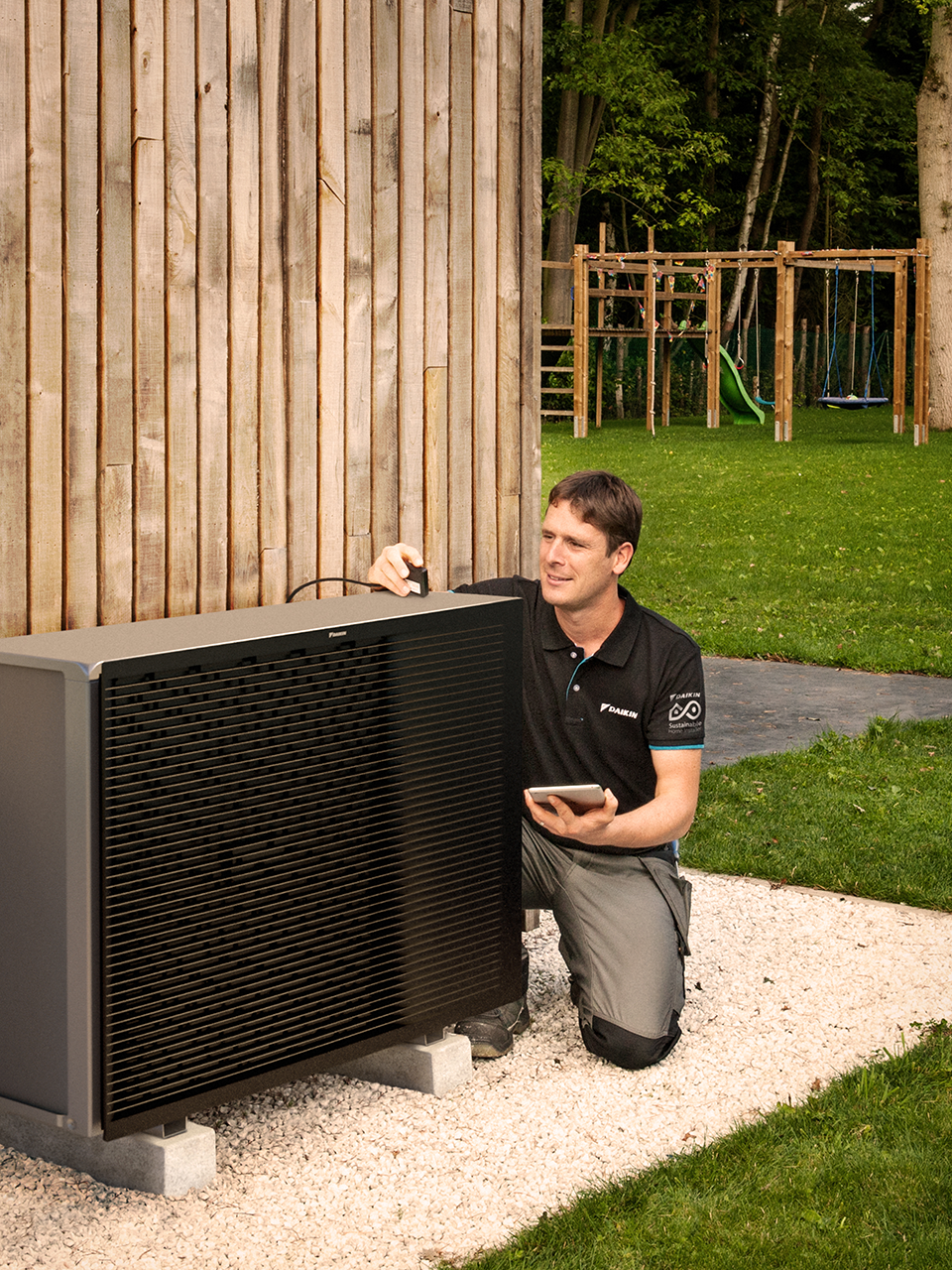
The 8-class heat pump, featuring Daikin’s R32-based technology, was installed in March 2022 above a side doorway from the utility room to the driveway. The monobloc design has a small refrigerant charge in the outdoor unit – and requires just electrical and hydraulic connections with the heating and hot water circuits.
“One of the advantages of this generation of heat pumps is that they are much smaller and lighter than previous designs, so they can easily be installed at a high level,” says Matteo. “It’s a very neat and tidy installation.”


The field test
Energy consumption figures before and after switching systems show a dramatic change. Matteo logged the monitoring and data gathering on Excel, producing a monthly breakdown of kWh of energy used in the house. The significant drop in energy usage since the installation of the heat pump is clear to see.
The data was gathered from a mix of sources. The total energy consumption comes from the home’s energy bill, the heat pump consumption comes from Daikin’s Onecta app, and the EV usage comes from the Easee charger app.
In the 15 months before the heat pump was installed, consumption – recorded from energy bills – ranged from 600kWh to 2,400kWh a month – mostly gas for heating and hot water. The highest monthly electricity consumption in this period was about 500kWh.
Almost two years since the change, and the introduction of additional monitoring systems, monthly electricity consumption has ranged from just 350kWh to 1,100kWh, even with electric vehicle charging latterly adding to the load.
The kitchen has an induction hob, so with no further need for gas, the supply has been discontinued. The house is now fully electric.
Third party controls
Part of the trial project focuses on the integration of third-party controls, typically with valves on each radiator or a group of radiators in a large room. Matteo says: “Overall, you feel way more in control, and I think this flexibility contributes to lower running costs.”
Previously, the house simply had downstairs and upstairs heating zones. The downstairs thermostat was by the front door on the northern, cold side of the house. However, the kitchen was on the warmer, south-facing side.
“This meant the old boiler was effectively overheating the warmer side, and wasting my money,” says Matteo. “Independent control now means there is less wasted energy because the system is not overheating rooms on the warmer side of the house.”
He says the system also overcomes any lack of flexibility in hot water management. “The new system also works well with the hot water. It’s easy to adjust the scheduler through the app on my phone – especially useful if you need an extra shower.
“The app also allows you to control things when you are on holiday – you don’t want to heat an empty house. On one occasion, I forgot to set the holiday routine before leaving, but I was able to do it remotely in a few seconds.”
The field test has successfully confirmed the hard numbers behind heat pump efficiency. “I still believe the best way to judge savings is by being able to tangibly measure them,” says Matteo.
“The numbers don’t lie. Since switching to a fully electric life, and leveraging the power of connectivity for better monitoring and operation, I’m absolutely saving energy. And at the same time I’m also way more in control of what goes on in our house, which is an added bonus.”

Products used on this project


Get in touch with an installer
Complete the form to be contacted by one of our carefully selected installers for expert advice.

