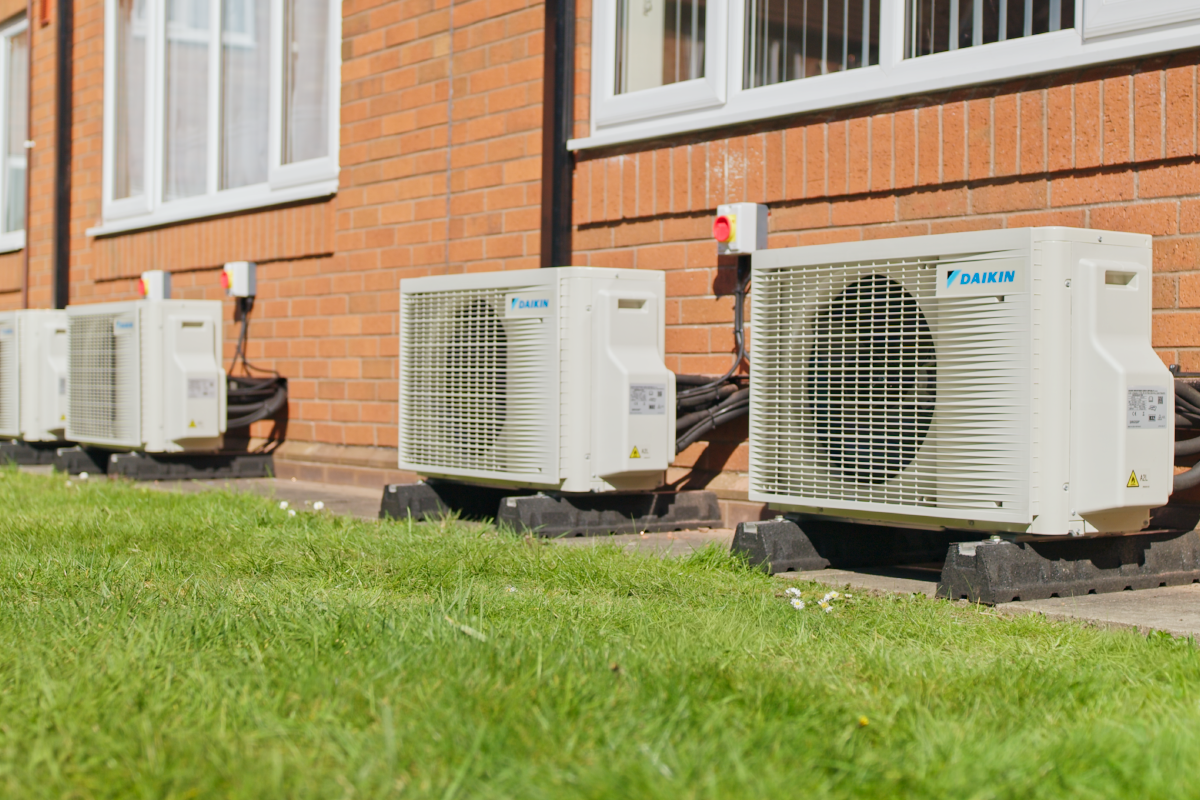
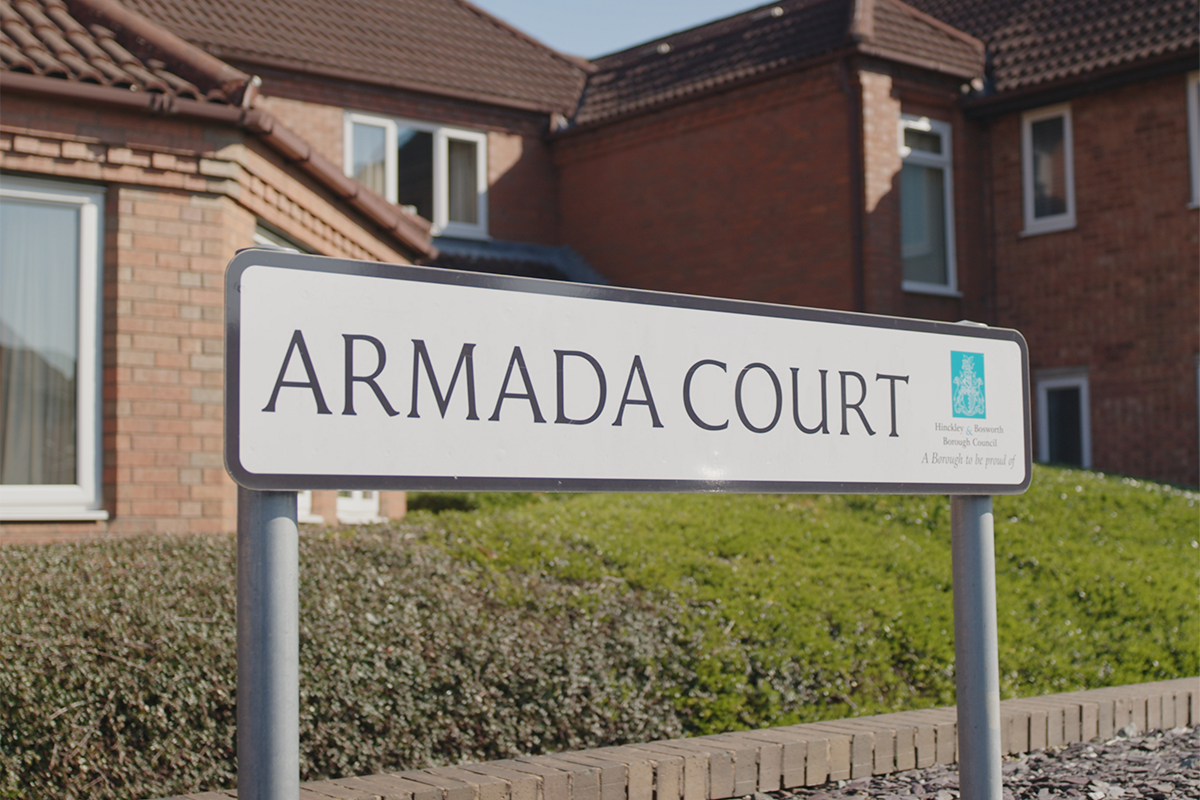
Armada Court is a sheltered housing scheme in Hinckley, owned and managed by Hinckley & Bosworth Borough Council. Its communal gas boiler system was reaching the end of its life, pushing up costs, overheating shared spaces and leaving residents with little control over their own homes. Working with installer Robert Heath Heating, part of the Daikin group, the council replaced it with Daikin air to air heat pumps, giving residents individual heating, cooling and control in their own homes.
The problem with a shared system
The existing communal boiler served the whole scheme from a single, ageing plant room. Efficiency was low, bills were high for both the council and residents, and reliance on fossil fuels worked against the council's decarbonisation commitments and local air quality. Heat loss across the high temperature distribution network left communal areas uncomfortably warm, particularly in summer. Residents paid a share of the scheme's total running costs rather than for the heat they actually used, and had little say over the temperature in their own flats.
With the plant room nearing the end of its operational life and the likelihood of failures rising, the council faced significant reinvestment either way. It chose to move off gas, simplify day to day operation and hand independent control to residents, while reducing the risk of summer overheating as the climate warms.
A system designed around residents
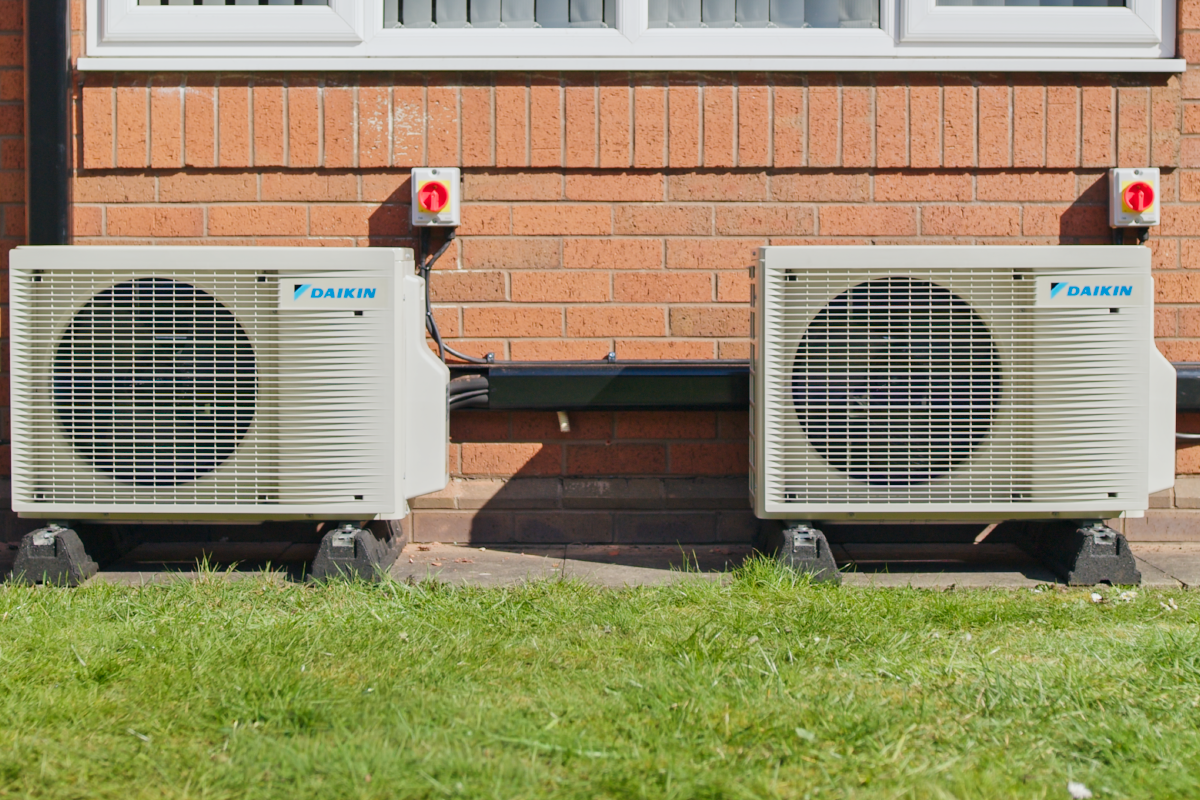
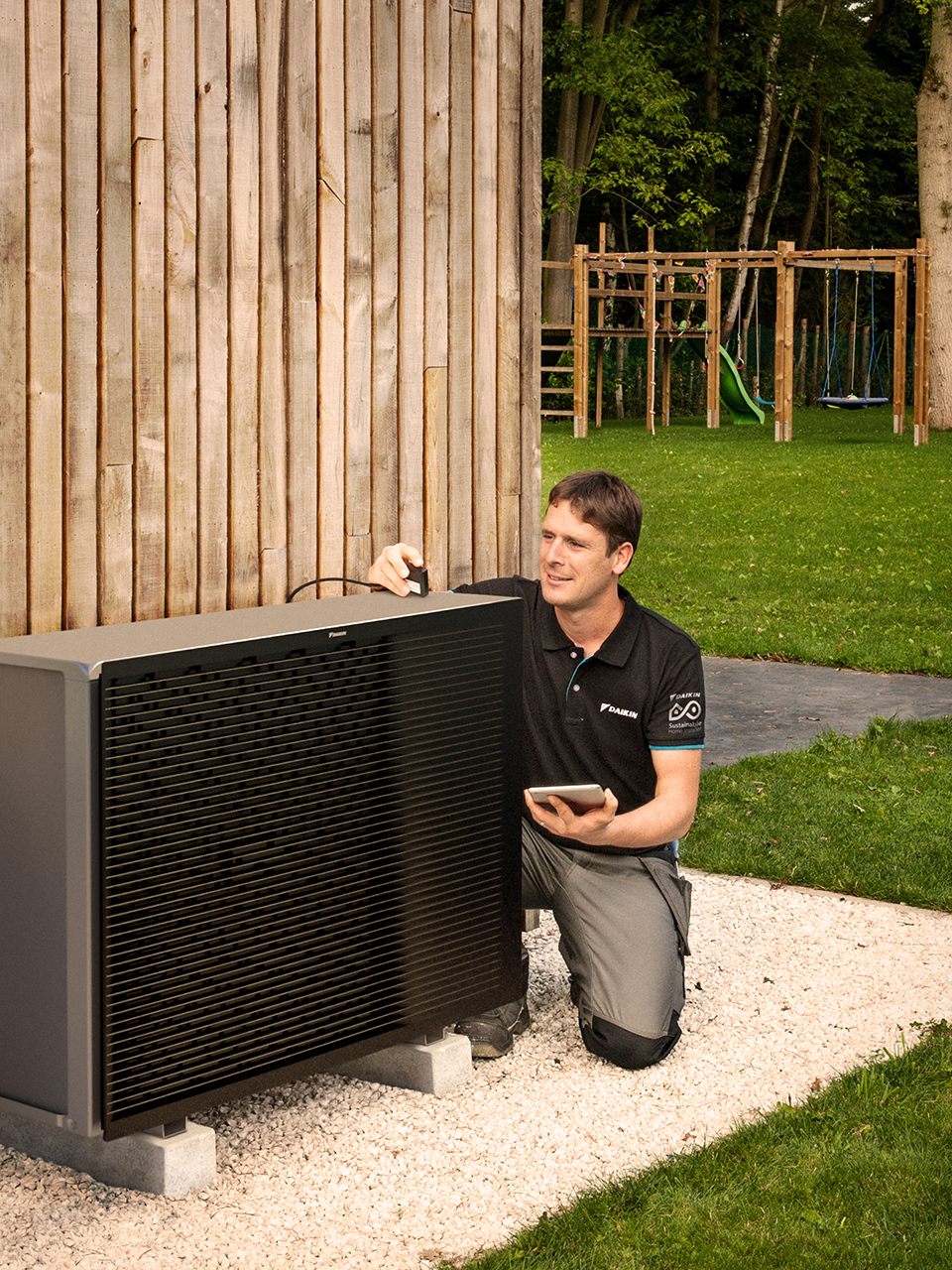
Robert Heath Heating was appointed to design, supply and install a scheme wide air to air solution. Fifty-nine Daikin multi-split outdoor units and one single-split outdoor unit, 60 in total, serve 129 indoor fan coil units, combining Daikin Stylish wall mounted units with Daikin Perfera floor standing units to suit each room.
Every home now has heating and cooling delivered as circulated warm or cool air, with filtration that removes airborne particles such as pollen, and intelligent sensors that detect presence and direct airflow away from people in the room.
Two changes came out of working through the specification with the council. Floor standing units were specified for lounges so that residents' curtain rails were left untouched. The original central, hard wired controller was replaced with remote controls in the lounge and hallway of each home, which residents can use in a fixed position or carry with them, so heating can be adjusted from the armchair. It proved very popular.
The old gas system was decommissioned and removed responsibly. Each home was disconnected from the communal system, all associated emitters were taken out, and the affected areas were made good.
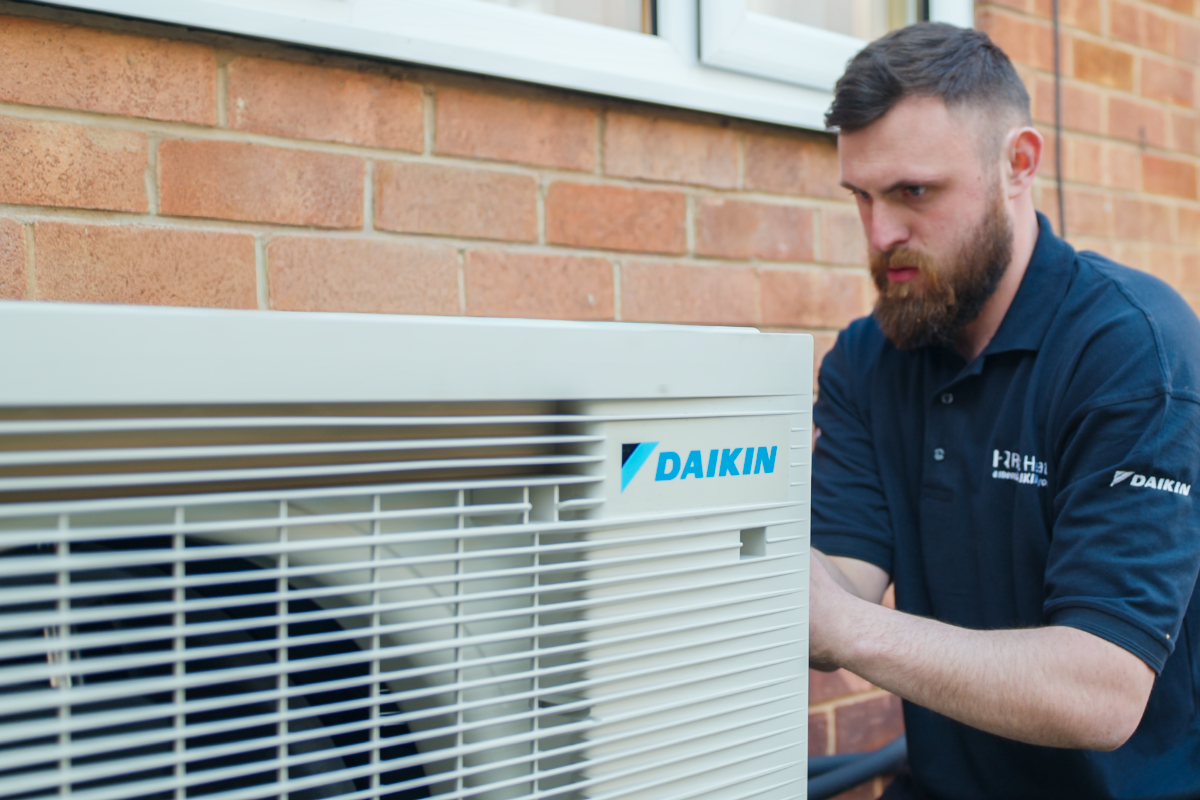
Installing around residents in situ
The project ran from 6 January to 24 April 2025, with Armada Court occupied throughout. Many residents have specific care needs, so the programme was built around them rather than the other way round.
Robert Heath Heating hosted regular coffee mornings to talk through the project and answer questions, and issued booklets explaining the system and the installation process. A site office in the car park became the point of contact for residents as much as for the siteteam. Will, the Renewables Installation Lead, was based there and doubled as resident liaison, giving everyone a single point of contact and his direct number. Dan, Head of Net Zero Operations, worked from the office regularly, and an open door policy meant residents could raise concerns privately if they preferred. The first session confirmed the programme of works and locked in installations around residents' availability, followed up by letters, phone calls and conversations on site, with the flexibility to move jobs when circumstances changed.
Disruption was managed just as deliberately. A fenced storage container in the car park kept tools, materials and equipment out of the way, and protective sheeting and dust suppression were used inside homes. All internal works were completed on day one of each installation to keep time in the property to a minimum. External works followed, covering bases, heat pumps, trunking and cabling, and only then was the communal system disconnected and radiators removed, so no one was left without heating and residents had a final chance to ask about the controls.
Working in occupied homes put a premium on process. As Principal Contractor, Robert Heath Heating produced a full Construction Phase Plan from the Principal Designer's pre-construction information for CDM, and kept RAMs, F-gas log books, a visitor log and a first aid station at the site office. Every installation was carried out by certified engineers, in full compliance with F-gas and electrical regulations and designed to meet relevant building regulations.
Two technologies for the communal areas
The communal areas were tackled as a second phase and needed a different approach. Two kilometres of hallways and complex ceiling voids ruled out a single solution, so Dan, Head of Net Zero Operations, and Chris, Technical Director and a Chartered CIBSE Engineer, worked with the council on a dual technology answer.
Hallways are served by a hydronic heat pump solution, with the units mounted away from the building and pipework and cabling run beneath the car park to keep noise down and parking spaces intact. They hold a consistent background temperature through the heating season. Air to air was specified for the communal lounges, library and kitchen, where a more reactive system suits year round use.
Lower carbon and lower bills
The new system is projected to cut annual carbon emissions by an estimated 43.4 tCO2e, a substantial contribution to the council's environmental targets.
Residents now have a highly efficient system under their own control, paying only for the energy they use rather than a share of communal running costs, with anticipated annual savings. Individual time and temperature control in each flat lets them manage comfort across the seasons, and maintenance requirements are expected to fall significantly compared with the old infrastructure.
A significant improvement in EPC ratings is projected, and will be fully quantifiable once these specific multi-split air to air heat pumps are adopted into the SAP and rdSAP product databases. Robert Heath Heating's advice to clients is to schedule EPC reassessments once the equipment becomes selectable in the Product Characteristics Database.
Feeding into the next standard
Air-to-air heat pumps do not yet have an MCS standard. During the project, Ian, RHH's Director of Strategy and Partnerships, engaged MCS's technical standards team and hosted them on site with the council, so they could see the technology in a real setting and help progress the new standard. Dr Manju, Daikin's SAP expert, also attended, advising on how units enter the PCDB for EPC calculations.
The session gave the council early sight of where the standards are heading and has enabled it to plan a four year programme of funded decarbonisation across its other sites, delivered to PAS 2035.
A model for sheltered housing
Armada Court shows what off gas heat can look like in occupied sheltered housing. Residents have warmer homes, lower running costs and, for the first time, control of their own heating, with cooling built in for the summer months. For Hinckley & Bosworth Borough Council, it has opened the way to a much wider decarbonisation programme.
Residents now have a highly efficient system under their own control,
paying only for the energy they use rather than a share of communal
running costs, with anticipated annual savings. Individual time and
temperature control in each flat lets them manage comfort across
the seasons, and maintenance requirements are expected to fall
significantly compared with the old infrastructure.
Get in touch with an installer
Complete the form to be contacted by one of our carefully selected installers for expert advice.