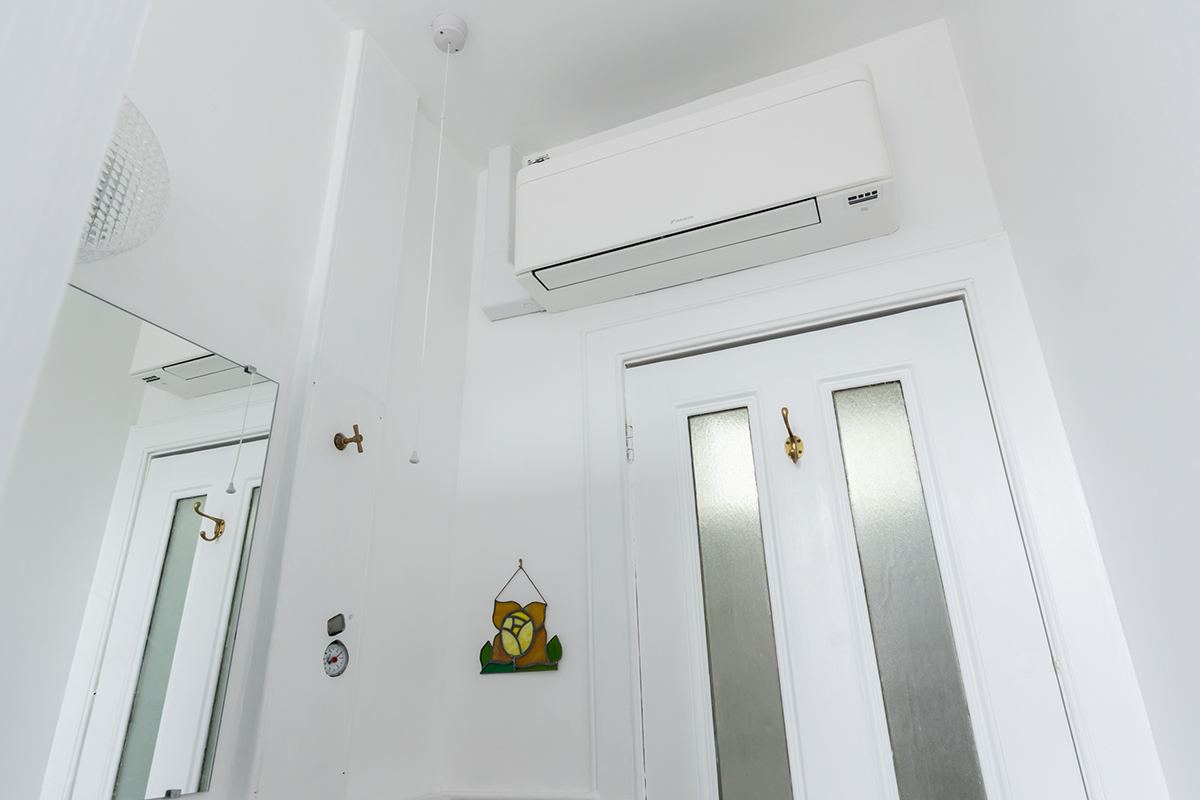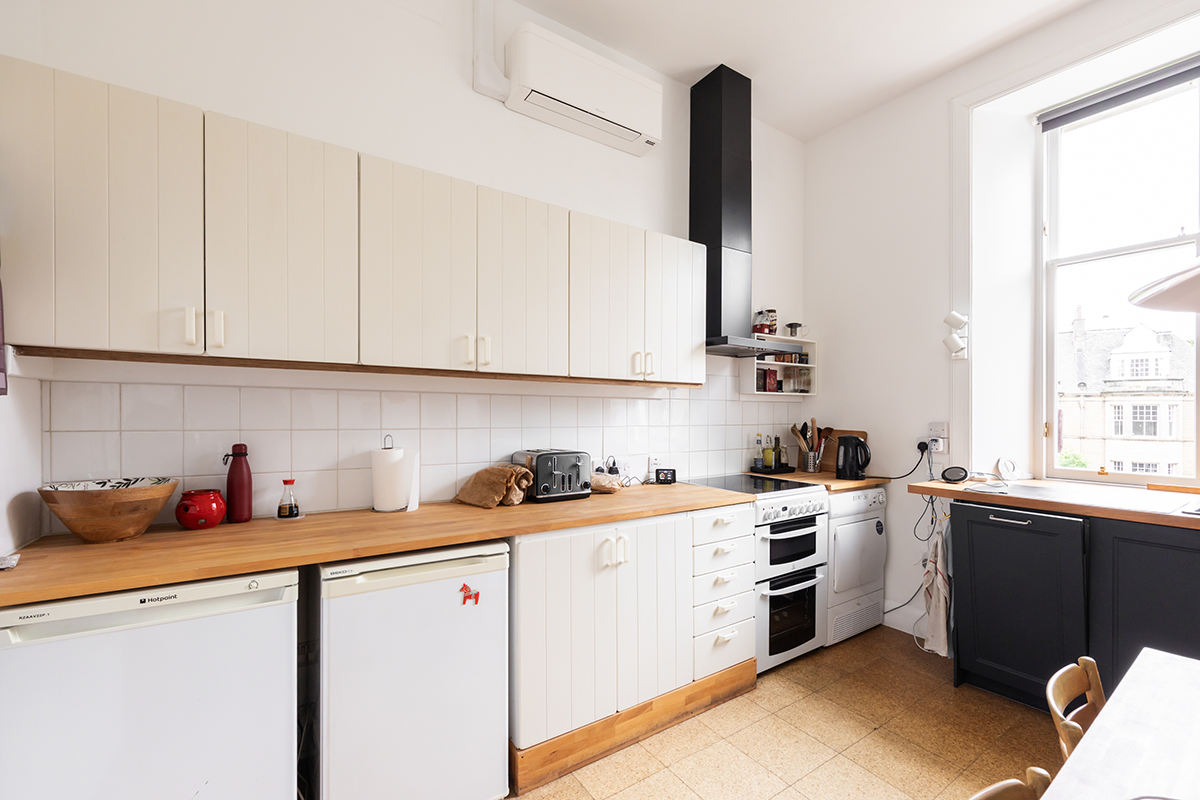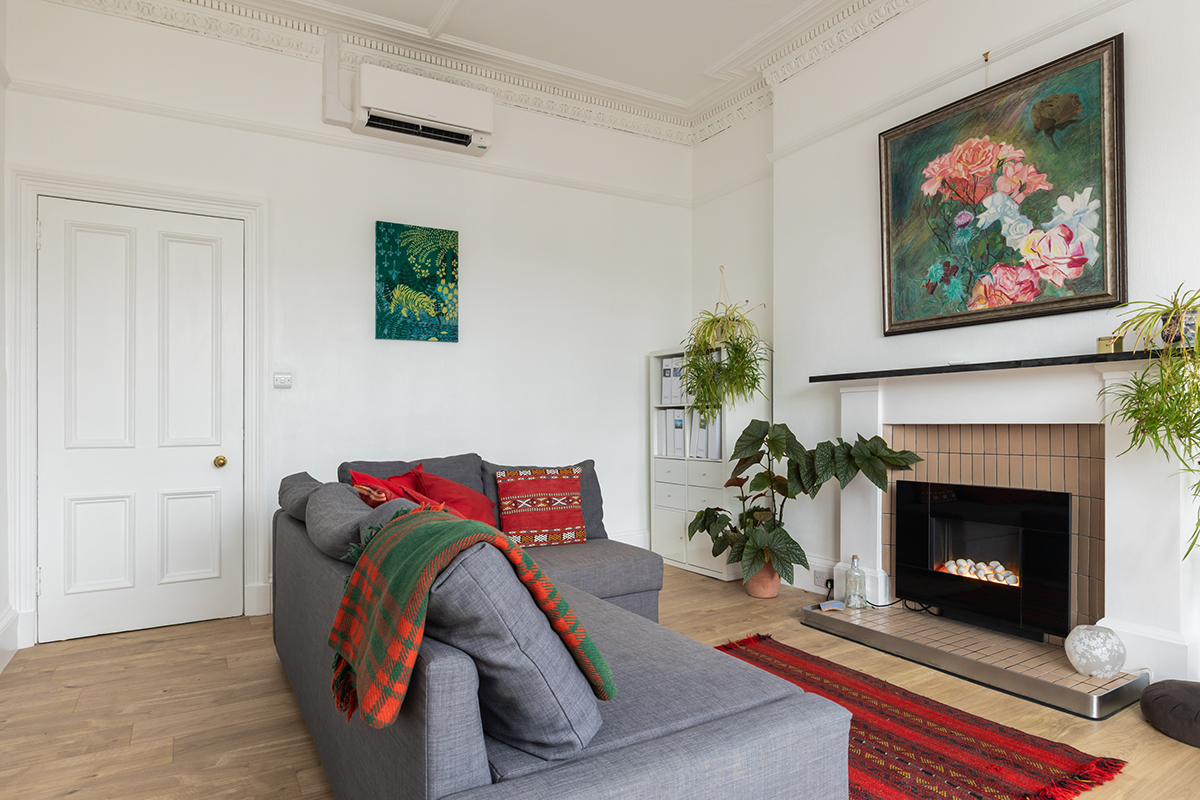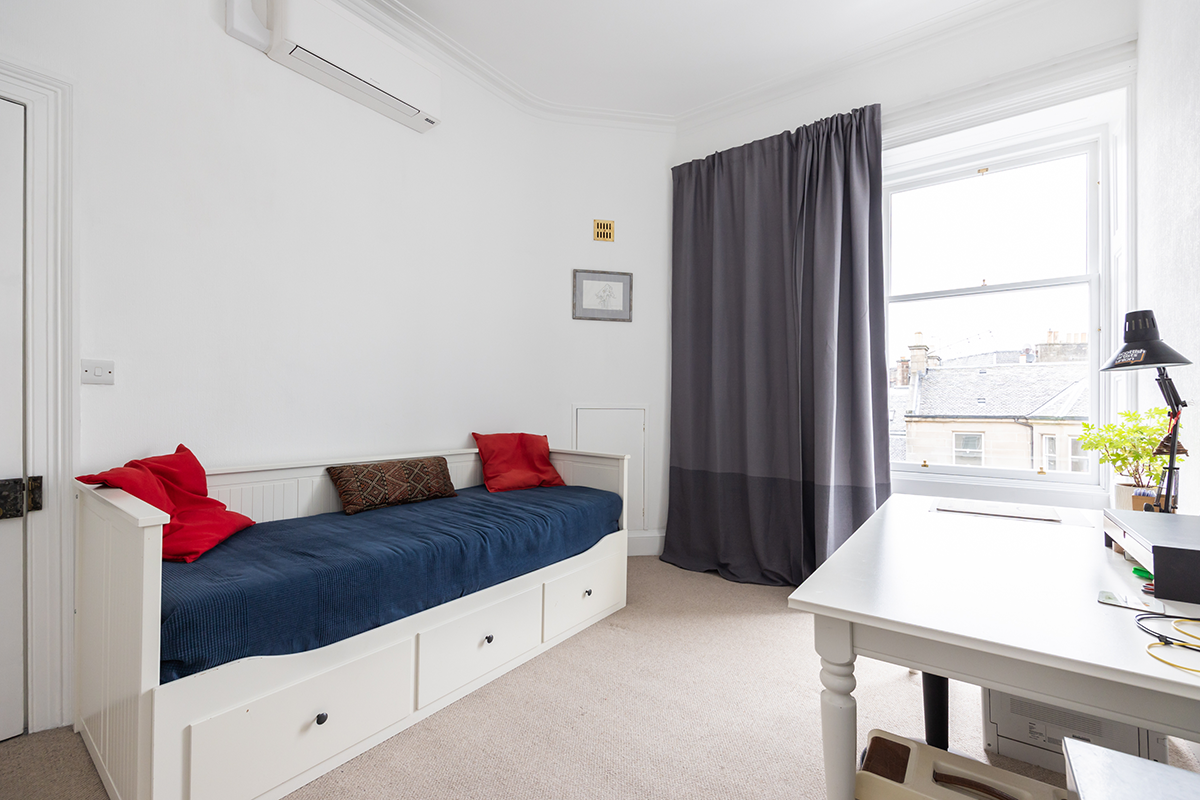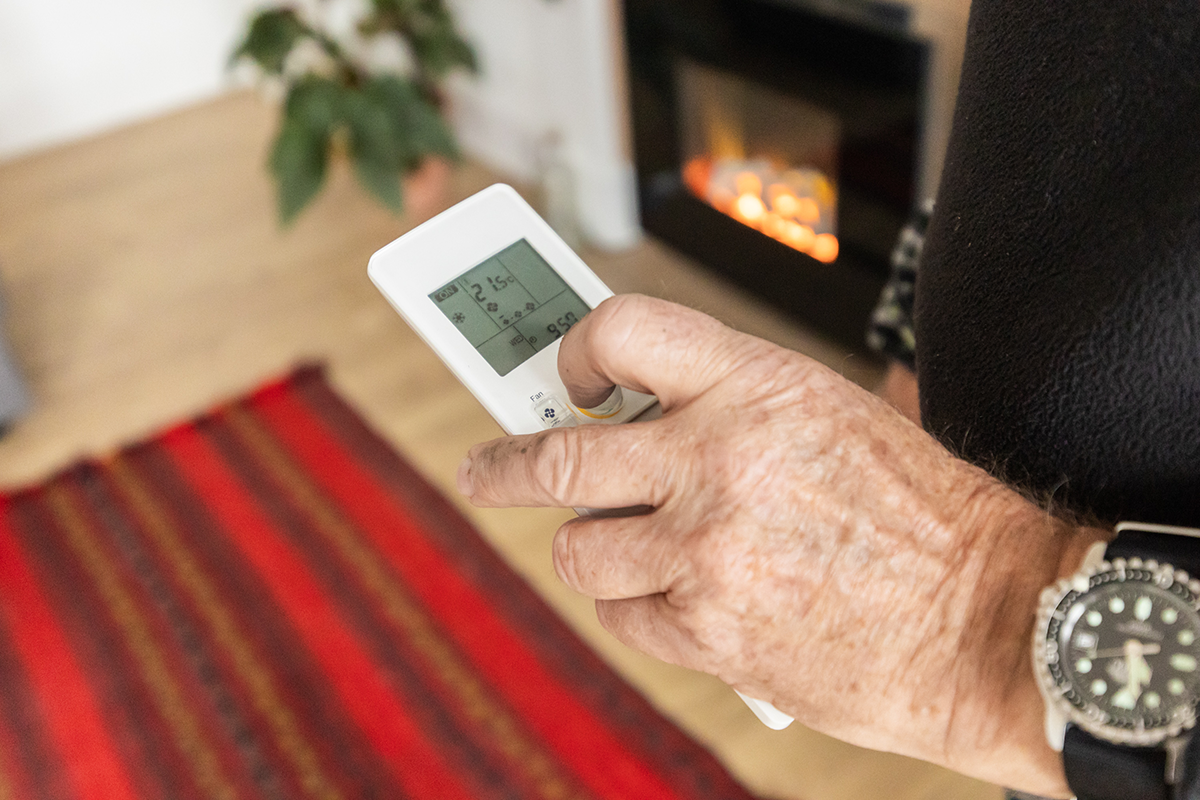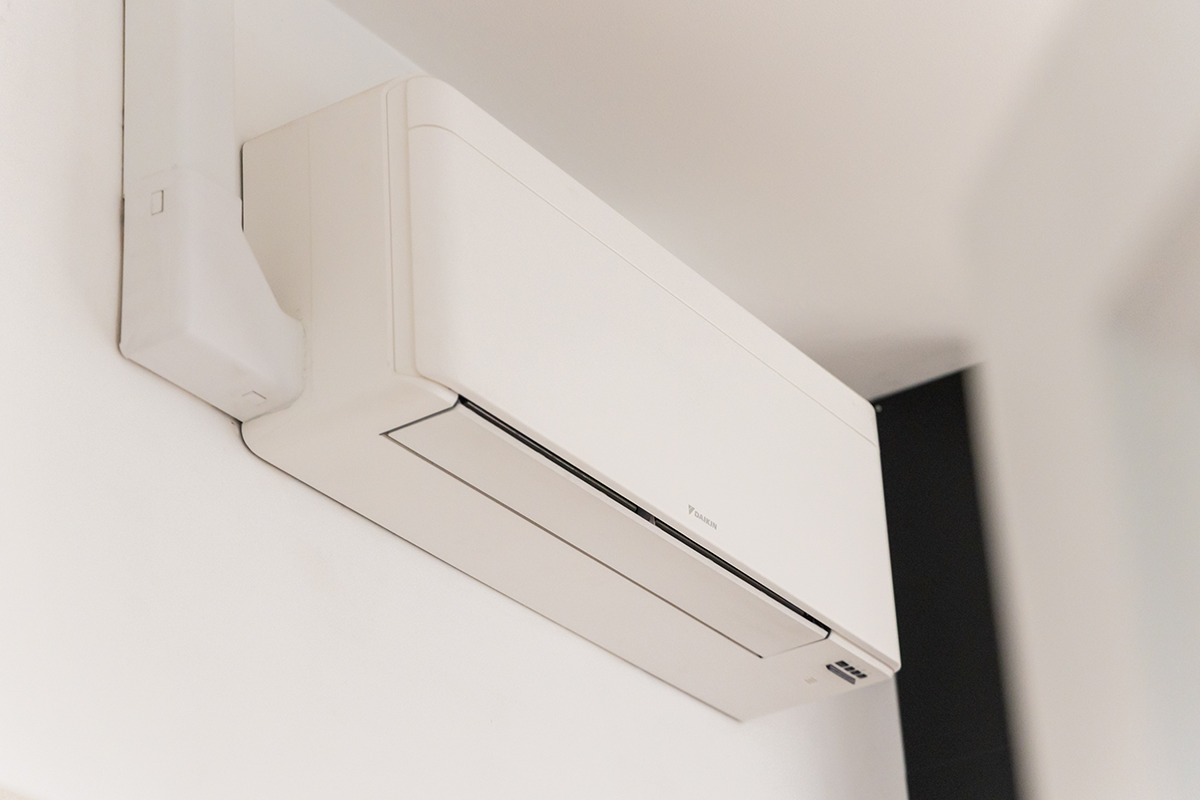
For Bill White, renovating his home provided an opportunity to rethink how a Victorian Edinburgh tenement flat could be heated. The top-floor property had relied on night storage heaters, but Bill wanted a more flexible and efficient solution. Working with Daikin and installers, FLO Renewables Scotland, Bill had a five-room air-to-air heat pump system installed, providing both heating and cooling. The project was also intended as a ‘learning by doing’ pathfinder project, exploring how the energy efficiency of an ordinary Edinburgh flat could be maximised.
A different approach to heating
Bill, who has lived in the top-floor Victorian tenement flat for the past 14 years, required a full renovation, including a new heating system, with the intention of discovery, as well as personal comfort: “Our full flat renovation project had two purposes. It was necessary to fully renovate the flat and it needed a new heating system. This was used as a ‘learning by doing’ pathfinder project planned to understand how the energy efficiency of an ordinary Edinburgh property can be maximised.”
The previous heating system consisted of night storage heaters, which Bill found expensive and inflexible. “The night storage heaters were the worst of every world: incredibly expensive to run because they essentially supplied ‘always on’ heat that you cannot focus when, or where, you want it.” After removing these heaters, Bill used portable heaters for two years, which at least gave him more control over his daily heating set-up.
Bill had researched air-to-air heat pumps through contacts in the Swedish house-building industry and believed the technology offered a particularly suitable solution for the UK. “We chose an air-to-air heat pump system for this installation as we know from our discussions with our contacts in Sweden that this is the most economical to run and easiest to install system.”
Choosing Daikin
Air-to-air heat pumps remain relatively uncommon in Britain, and so finding a suitable installer was an important part of the project. After some research, Bill turned to Daikin's approved installer process. “Daikin is the leading brand in this product arena, and they have established an excellent support system.” Joe Lavery of FLO Renewables Scotland, based in Glasgow, led the installation.
A top-floor challenge
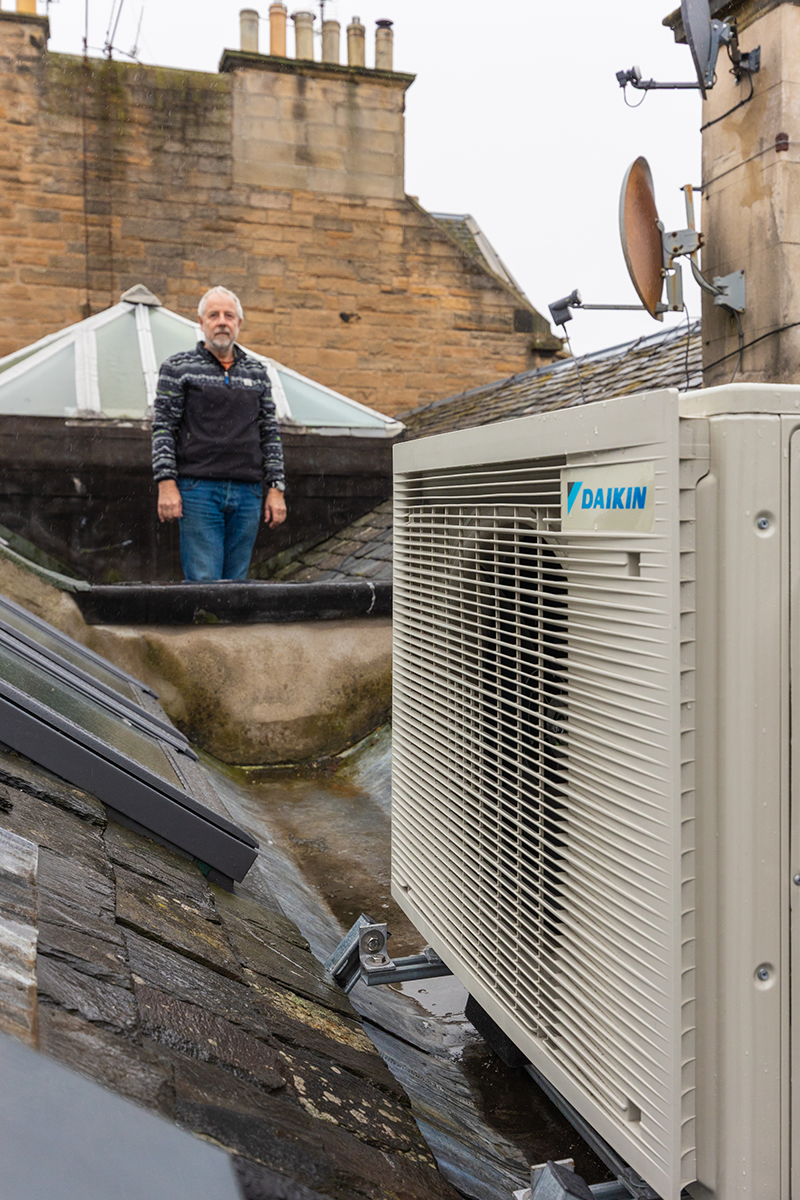
The property presented some unusual installation challenges, particularly because of its location on the top floor of an older tenement building, as Joe notes. “It was a challenging commission simply because it’s a top-floor tenement flat. The outdoor unit had to go on the roof, so that was a challenge on its own, and there were no lifts!” A crane was used to lift the outdoor unit onto the roof. Inside the property, however, the lack of an existing wet heating system provided something of a blank canvas. “Bill was using free standing heaters, so there was no existing system of pipes to consider, which meant we were putting in all-new pipework, trunking and cables. Bill managed the planning approval process for the conservation-area installation himself and arranged for the external unit to be positioned ready for us to connect.”
Five-room air-to-air system
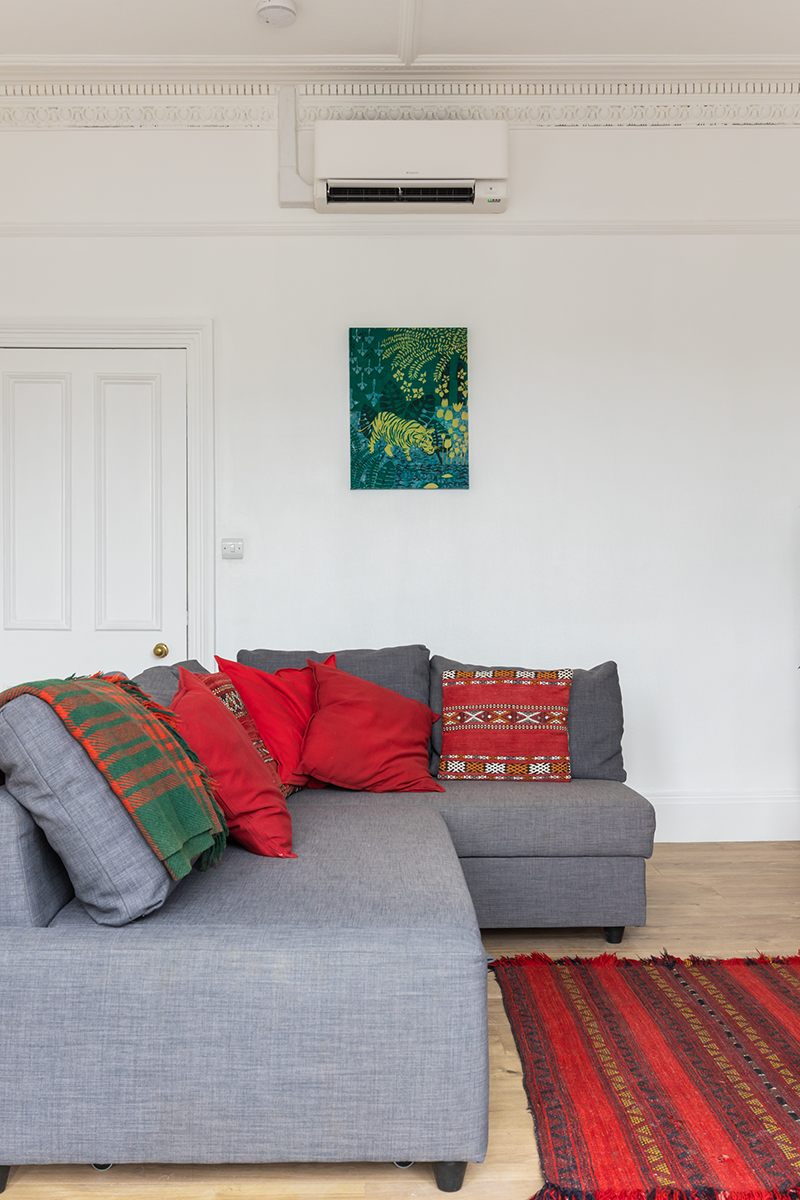
The Daikin system uses an outdoor inverter unit on the roof, with refrigerant pipework and cables routed through the attic space to five indoor units, as Joe explains. “The system essentially relies on refrigeration, with the unit blowing out hot and cold air, as needed. The installation took approximately one week.”
Bill highlights the simplicity of the waterless system compared with a conventional wet heating installation. “Hook up, testing, cleaning and gassing up the system and commissioning was a relatively simple and quick process. As it’s a waterless system we didn’t have the additional complexity of water radiators, pipework, heat store water tank, manifold and control system to install and set up and balance.”
Heating and cooling when needed
After a year in operation, Bill says the system has provided a unique type of comfort to previous heating systems he has experienced. “It feels very different to a radiator-based system, but once you get used to that you find that it is comfortable and convenient; a bit like the difference between driving an electric car and an ordinary car perhaps.”
The system provides rapid heat directly into each room. “Room air heat is up to speed a few minutes after you turn on the room unit.” Bill can also heat individual rooms as required. “You can sector the heat to the room you are using, so it’s very versatile and economical.” The system's cooling capability proved to be an unexpected benefit during the summer of 2026. “The surprise benefit we had from this system was that it cooled us during the summer heatwave. In truth, this being Scotland, we had not expected to need the air-to-air heat pump cooling function too often, but when the external air temperature outside was too high for natural ventilation we were able to cool our bedroom to 18 degrees C for under 8p an hour.”
Lower running costs
The air-to-air heat pump has also reduced running costs compared with the portable heaters used before installation. “When we fitted the air-to-air heat pump system the running cost was less than even our frugal use of portable heaters had been.” Bill believes the direct transfer of heat into the rooms makes the system particularly efficient. “Given the alternatives, we can clearly see that it is the cheapest form of heating that this flat could have.”
The system has ‘just worked’
Bill's experience of Daikin throughout the project has been very positive, and asked whether he would recommend a Daikin system, his response is clear: “Yes; Daikin’s product range and support system is better than anyone else’s in my opinion.” He describes his dealings with Daikin during installation as “Good, practical and realistic”, adding that there has been little need for post-sales support. “The system has ‘just worked’ since its installation so we have not needed any post sales dealings with Daikin.”
For Bill, the project has demonstrated that air-to-air heat pump technology can provide an effective heating solution even in an older, top-floor tenement property – while also delivering the unexpected benefit of cooling during warmer weather.