A guide to air-to-air heat pumps for small rooms
Big comfort in small spaces: choosing the right compact air conditioner

Small rooms need efficient, compact climate control equipment that doesn’t waste energy or take up too much floor space, so air conditioners, also known as air-to-air heat pumps, are ideal. To get the best results, you should match the air conditioning unit to your room size and check key specs like energy rating and noise level. Placement is also important: position the unit to maximise airflow across the room while avoiding draughts. In this guide, you'll learn how to size your unit correctly, choose energy-efficient models, reduce noise and maintain long-term comfort in small rooms.
Why do small rooms need smart heating and cooling solutions?
As energy prices rise and sustainability regulations tighten, choosing the right small-space cooling and heating solution is not merely convenient, it's smart.
Small rooms, can be tricky to heat and cool. You need efficient, compact equipment that doesn’t waste energy or take up too much floor space.
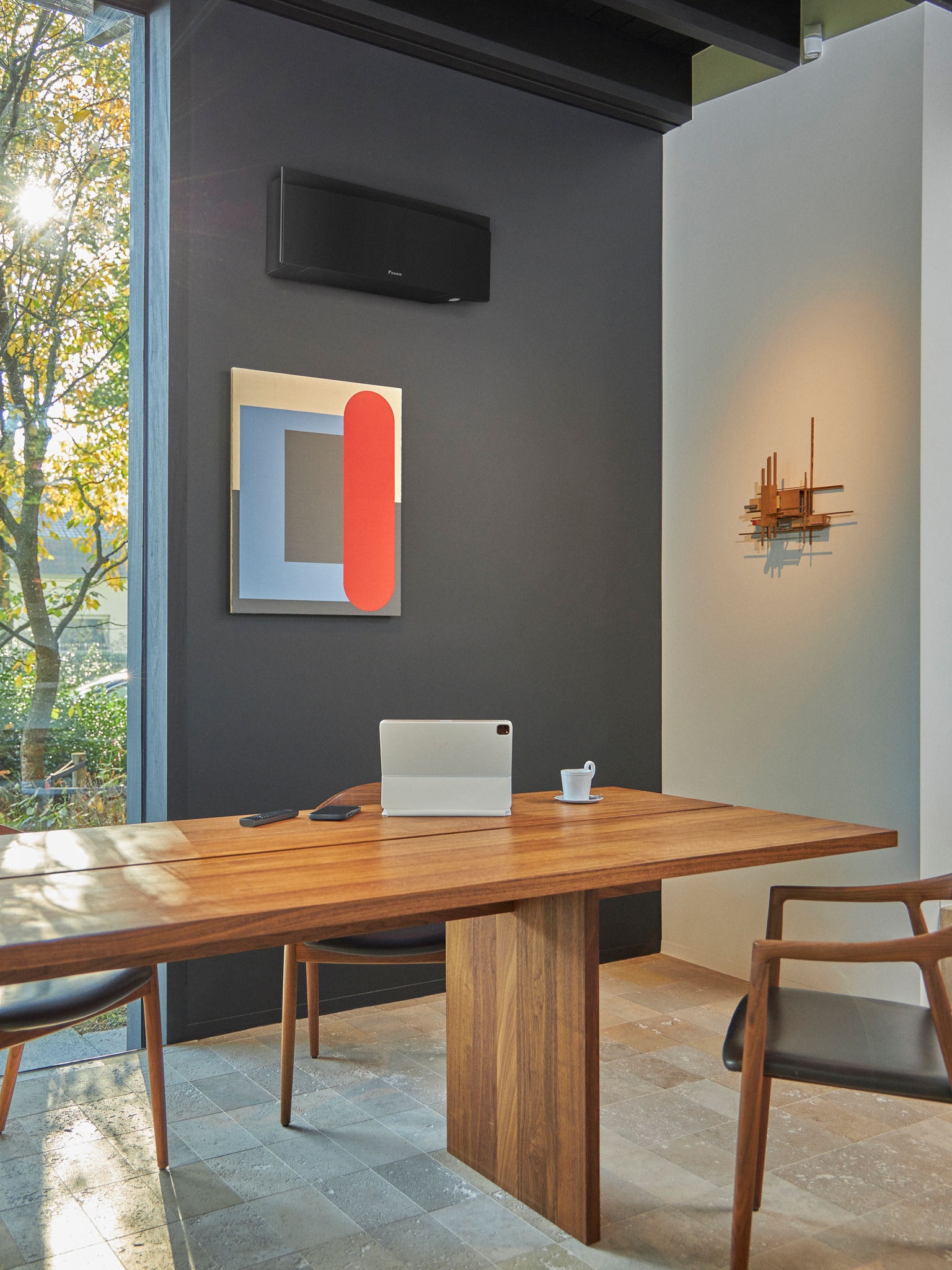
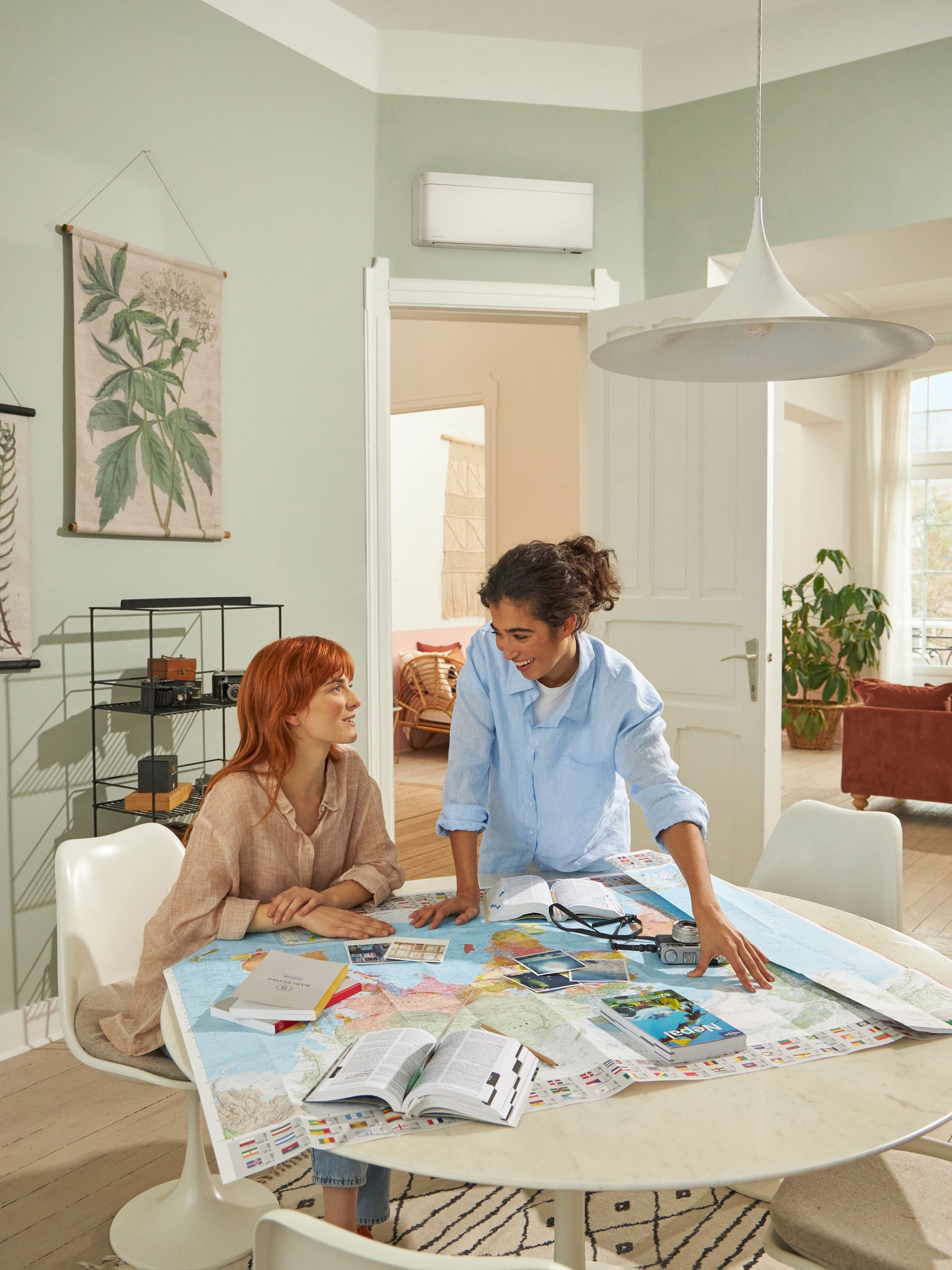
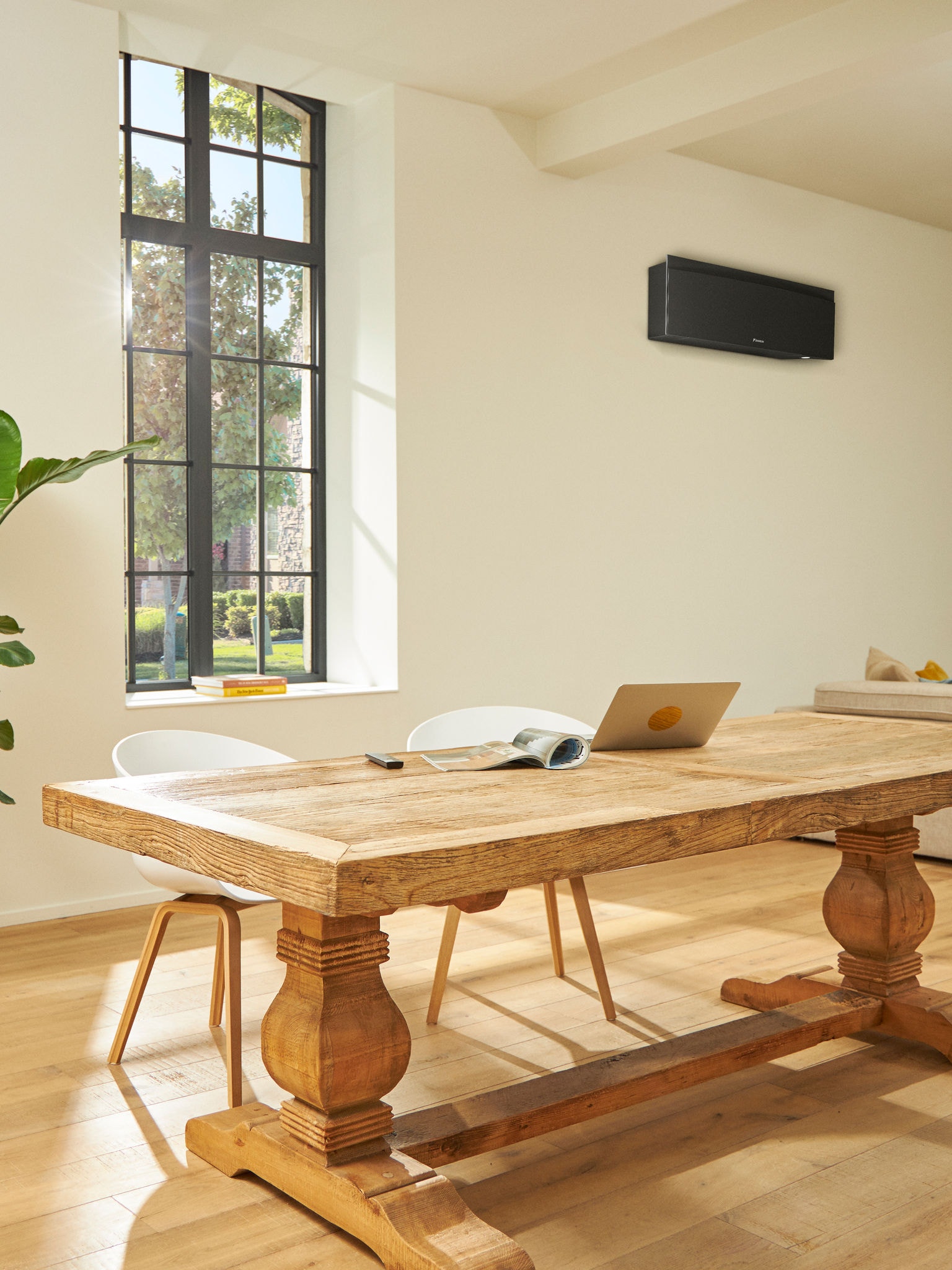
For consistent comfort, fitting a fixed wall-mounted split air conditioning unit, or air-to-air heat pump, is ideal. The indoor unit is mounted on the wall and delivers steady cooling or heating without large temperature swings or inefficiencies.
An air-to-air heat pump in a small room can be particularly helpful for rooms without under-floor solutions or radiators.
Portable air conditioning units still have a place, particularly for temporary set-ups or rooms under 10 m², but for long-term usage, a purpose-built unit delivers superior comfort, efficiency and value.
What qualifies as a small room?
A small room can be defined as being around 9 to 20 m² (e.g. a bedroom, study or compact living area). For rooms of this maximum size, a cooling capacity of 2.0–2.5 kW is typically suitable.
Matching the air conditioning unit to room dimensions is critical.
- An undersized unit will run continuously without reaching the target temperature. This will in turn drive up energy bills, increase wear and tear, and compromise your comfort.
- An oversized unit will cycle on and off rapidly. This will waste energy, produce draughty or uneven cooling, and depending on the unit, control humidity poorly.
More factors that influence sizing
- Ceiling height (higher ceilings require more capacity)
- Insulation quality
- Window size and orientation (south/west facing rooms may need more capacity)
- Use of the room (heat gains from equipment or people)
Getting this sizing right means better efficiency, lower bills and consistent comfort.
How can compact cooling and heating systems be both energy-efficient and sustainable?
Matching the energy efficiency of your air-to-air heat pump, with sustainability is the best of all worlds.
Energy ratings: what to look for
When you are selecting a portable or compact cooling system for a living room, checking the energy‐rating label is one of the most effective first steps. All new air conditioners sold in the UK come with an energy efficiency label, showing their SEER (Seasonal Energy Efficiency Ratio) or EER (Energy Efficiency Ratio) rating. The higher the number, the less energy the unit uses to deliver the same cooling power. Look for the familiar colour-coded sticker - from green (most efficient) to red (least efficient). The best models have A++ or A+++ ratings.
Although a portable A+-class model might appear efficient, it could still consume 2.4 times more electricity than a wall-mounted unit of the same class because of design differences.
As a basic rule of thumb:
- Pick the highest efficiency class available for your budget.
- Check the kWh/year figure.
Every 100 kWh/year saved at an electricity cost of, say, £0.30/kWh equates to £30 annually.
Ensuring correct sizing is also part of the rating check: if you buy a unit rated for 3.5 kW cooling but install it in a 30 m² room with heavy sun exposure, it may run at full load often and consume more than expected, undermining the energy efficiency advantage.
Eco modes, timers, and sleep settings
- Many compact cooling units offer advanced features such as an energy-saver mode, programmable timers, and a night mode, all of which can reduce energy use.
- In night mode, the air conditioner automatically adjusts the temperature setting to prevent excessive cooling/heating to ensure a comfortable sleeping temperature.
- When using these features in a small living space that might be used, for example six hours a day for 90 days in summer, the savings can really mount up.
- Using the unit's timers and sleep mode can make a noticeable impact on bills.
Tips for greener air conditioning habits
How you use your air-to-air heat pump matters. Even the most efficient unit will perform poorly if it’s not used properly, so here's what to bear in mind:
- Keep the thermostat at the highest comfortable temperature in a compact living room
- Close blinds or curtains before direct sunlight hits the windows. This reduces the solar load, as well as the demand on the unit.
- Avoid turning the unit too low immediately when entering a hot room. Gradual cooling will avoid high demand cycles.
- Use the timer to switch off the cooling shortly before you leave or go to sleep. Use sleep mode with a gradual set-point increase will reduce running costs.
- Clean or replace filters regularly as studies show dirt can raise energy consumption by up to 20%.
- Consider whether a fan or ventilation combined with moderate cooling might meet your needs some of the time, rather than running air conditioning constantly.
How can you ensure energy efficiency and sustainability in compact cooling?
The key to considering energy efficiency and sustainability in compact cooling is choosing a unit whose “design kW” matches the room’s load. Undersizing leads to continuous running and oversizing leads to short cycling, both of which can negatively affect efficiency.
So to sum up:
- Take your room size
- Select the required capacity
- Choose a model with high SEER/EER and whose design fits the space
How do you keep an air conditioning quiet?
You don’t want air conditioning units to make too much noise, especially in bedrooms, studies or home -offices. As a rule of thumb, 20-30 dB is the level of a whisper, a quiet room, or a library, and 40+ dB is typical conversation. Daikin’s outdoor units, also known as air-to-air heat pumps, are designed to produce very low sound levels outside the home. Inside the property, Daikin indoor units are engineered to run whisper-quiet, typically generating sound levels of around 30 dB.
In contrast, portable air conditioners often operate at higher noise levels of up to 65 dB.
If you would like to take steps to further reduce noise, your installer will:
- Place the outdoor unit away from bedrooms
- Mount the outdoor unit on anti-vibration pads
- Avoid placing the outdoor unit near corners or obstructions that resonate sound
- Ensure proper clearances around the indoor unit(s)
What are the best placement strategies for maximum cooling efficiency?
For indoor split units, placement matters.
- Mount the indoor wall-unit high up on a solid wall, ideally central to the room’s longest dimension, so that airflow travels across the room rather than being blocked by furniture or corners.
- As far as possible, avoid mounting the unit directly above beds or desks, as airflow can cause draughts.
- Keep the indoor unit away from direct sunlight, lamps or heat sources that can distort its temperature sensing.
- The outdoor unit should be located with good ventilation, ideally shaded, with a clear front and enough distance from walls to allow airflow, typically 200-300 mm.
When someone chooses a unit for a small room, selecting a model with "quiet mode", “sleep mode” or “motion sensor”, ensures comfort at low noise and minimal energy.
Portable air conditioners: the pros and cons
While our main focus here is on fixed wall-mounted splits, portable air conditioners do have a role, especially for renters, temporary setups, rooms under 10 m², or where air-to-air heat pumps can't be installed.
Although portable air conditioners have their strengths:
- They can be moved between rooms relatively easily
- They are fairly easy to set up and require no permanent wall-cut or outdoor unit
Compared to a fixed split unit, they tend to be:
- Less efficient
- Noisier
- Less elegant with a considerable bulk on the floor and an exhaust hose through the window
If your situation is short-term or you cannot install a wall-unit, a portable unit can be a sensible interim solution, but for long-term comfort, cost-efficiency and quiet-operation in a small room, a fixed wall-mounted split from a trusted brand is the far superior route.
Final thoughts: What’s the best air conditioner for small rooms?
In a world of rising energy costs, tighter regulations and increasing expectations for quiet comfort, small rooms are best served by fixed wall-mounted units. Portable air conditioning units remain useful for temporary or restricted-installation situations, but for long-term efficiency, noise control, and elegance, a properly sized air-to-air unit wins every time.
Key takeaways
- Match the unit size to the room (e.g. 2.0–2.5 kW for 10–20 m²).
- Pick high-efficiency models (SEER/EER) as they will be cost-effective and provide greater sustainability in the long run.
- Check noise performance - the quieter the better.
- Choose a model with "quiet mode", "sleep mode" or "motion sensor" modes.
- Position it carefully to give it the best chance of performing at its best.
- Stay on top of the maintenance with regularly cleaned filters, it will perform effectively and efficiently.